
April 13, 2026
In retail, the promise of being a data-driven organization collides with an uncomfortable reality: data is messy. They are constantly changing, incomplete, or come from multiple sources that do not match each other.
This problem, known as messy data, is one of the biggest obstacles to retail data analytics and effective decision making. And although many companies invest in business intelligence tools, few manage to solve the problem from the root.
The problem of messy data in retail data analytics
Retail data comes from multiple systems:
- ERP
- POS
- eCommerce
- CRM
- marketing platforms
- logistics systems
Each one handles different structures, formats and frequencies. This creates three major challenges: schema drift, missing data, and inconsistent sources.
Schema drift: the silent enemy of analytics with artificial intelligence
Schema drift occurs when the structure of the data changes over time:
- columns are added or removed
- change field names
- data types are modified
This usually happens when:
- systems are updated
- new platforms are integrated
- change internal processes
Why is it a problem?
- Break existing dashboards
- Generates errors in reports
- Affects predictive analytics models
- Forces constant manual interventions
For retail teams, this means loss of trust in data.
Missing data: the hidden risk in data-driven decision making
Missing data is more common than it seems:
- incomplete transactions
- missing customer data
- incorrect inventory records
Impact on retail:
- Inaccurate forecasting
- Poor inventory planning
- Wrong segmentations
- Decisions based on incomplete information
In a competitive environment, this can translate into direct revenue losses.

Inconsistent sources: multiple versions of the truth in business intelligence retail
One of the most critical problems is the inconsistency between systems:
- The POS reports a sale
- The ERP shows another
- eCommerce has different figures
This generates what many companies call:
“multiple versions of the truth”
Consequences:
- Conflicts between teams
- Lack of strategic alignment
- Contradictory decisions
Without data unification with AI, it is almost impossible to solve this problem at scale.
Business Impact: How Messy Data Slows Growth
When data is not reliable:
- The teams ofI stop using them
- Decisions become intuitive
- Operational agility is lost
- Optimization opportunities are reduced
This directly affects:
- revenue
- efficiency
- customer experience
In other words, the data problem becomes a business problem.
How artificial intelligence improves data quality in retail
Artificial intelligence in data analytics is changing the way companies handle messy data.
1. Automatic detection of changes in schemas
AI can identify variations in data structures and adapt without manual intervention.
2. Intelligent handling of missing data
Using advanced models, AI can:
- identify inconsistencies
- infer missing values
- alert about quality problems
3. Unification of multiple data sources
AI connects disparate systems and creates a unified view of the business.
This eliminates silos and improves consistency.
4. Generation of reliable insights
With cleaner and more structured data:
- analyzes are more precise
- dashboards are more reliable
- decisions are more effective
How Rootlenses Insight solves the messy data problem
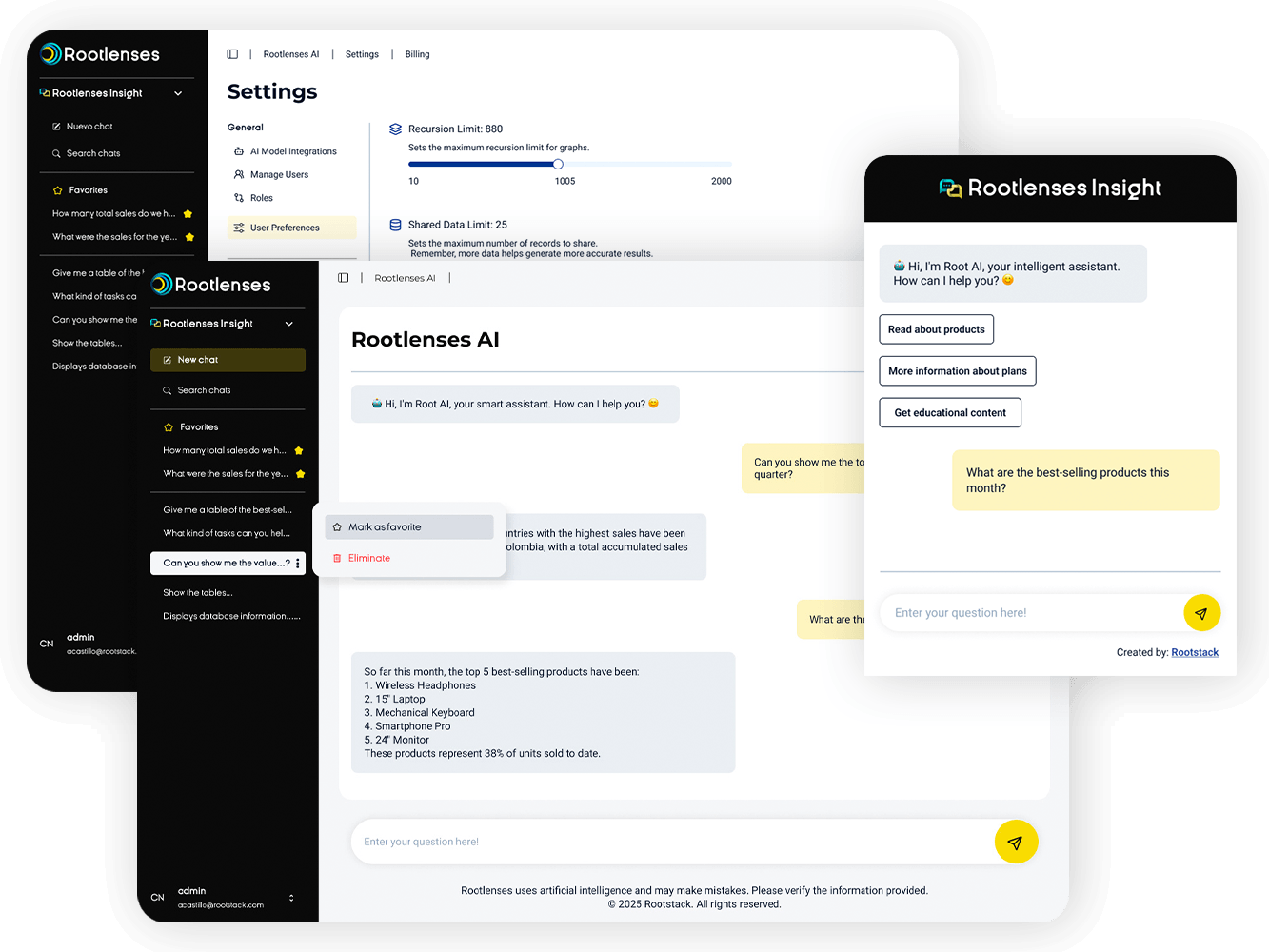
This is whereRootlenses Insight becomes a key solution for retail.
Automatic schema understanding
The platform interprets database structures without the need for manual configuration, adapting to changes (schema drift).
Integration of multiple data sources
Connects with:
- MySQL
- SQL Server
- PostgreSQL
- Oracle
Allowing information to be centralized in one place.
Analysis without technical dependence
Users can get insights without:
- write SQL
- depend on BI teams
- perform manual processes
Detection of inconsistencies and generation of insights
Rootlenses Insight identifies:
- anomalies
- inconsistencies
- improvement opportunities
And translate these findings into concrete actions.
Data governance and control
With role-based access, it allows:
- democratize data use
- maintain security and control
Benefits of improving data quality with AI data analytics
- Greater confidence in data
- Error reduction
- Better decision making
- Inventory optimization
- Increased operational efficiency
Conclusion: from messy data to smart decisions
The problem of messy data is not just technical, it is strategic. In retail, where every decision directly impacts revenue, data quality is critical.
Artificial intelligence applied to data analytics allows you to transform chaotic data into reliable and actionable information.
With solutions like Rootlenses Insight, companies can overcome challenges such as schema drift, missing data and inconsistent sources, achieving a more efficient, aligned and truly data-driven operation.
The result: better decisions, greater growth and a sustainable competitive advantage.


