
October 9, 2026
The AI-powered data analysis tools are transforming how companies interpret their information. Today, teams can ask questions in natural language, generate visualizations, and gain insights without writing code or constantly relying on technical specialists.
Among the available options is Julius AI, a tool that allows users to analyze files, spreadsheets, and data sources through conversational prompts. Meanwhile, Rootlenses Insight is designed to help businesses query their databases, generate reports, and get answers to business questions with access controls and traceability.
Although both solutions use AI to simplify data analysis, their approaches and priorities may differ.
In this comparison, we explore the main features of Rootlenses Insight and Julius AI, their differences, and the scenarios in which each tool can deliver the most value.
What is Rootlenses Insight?
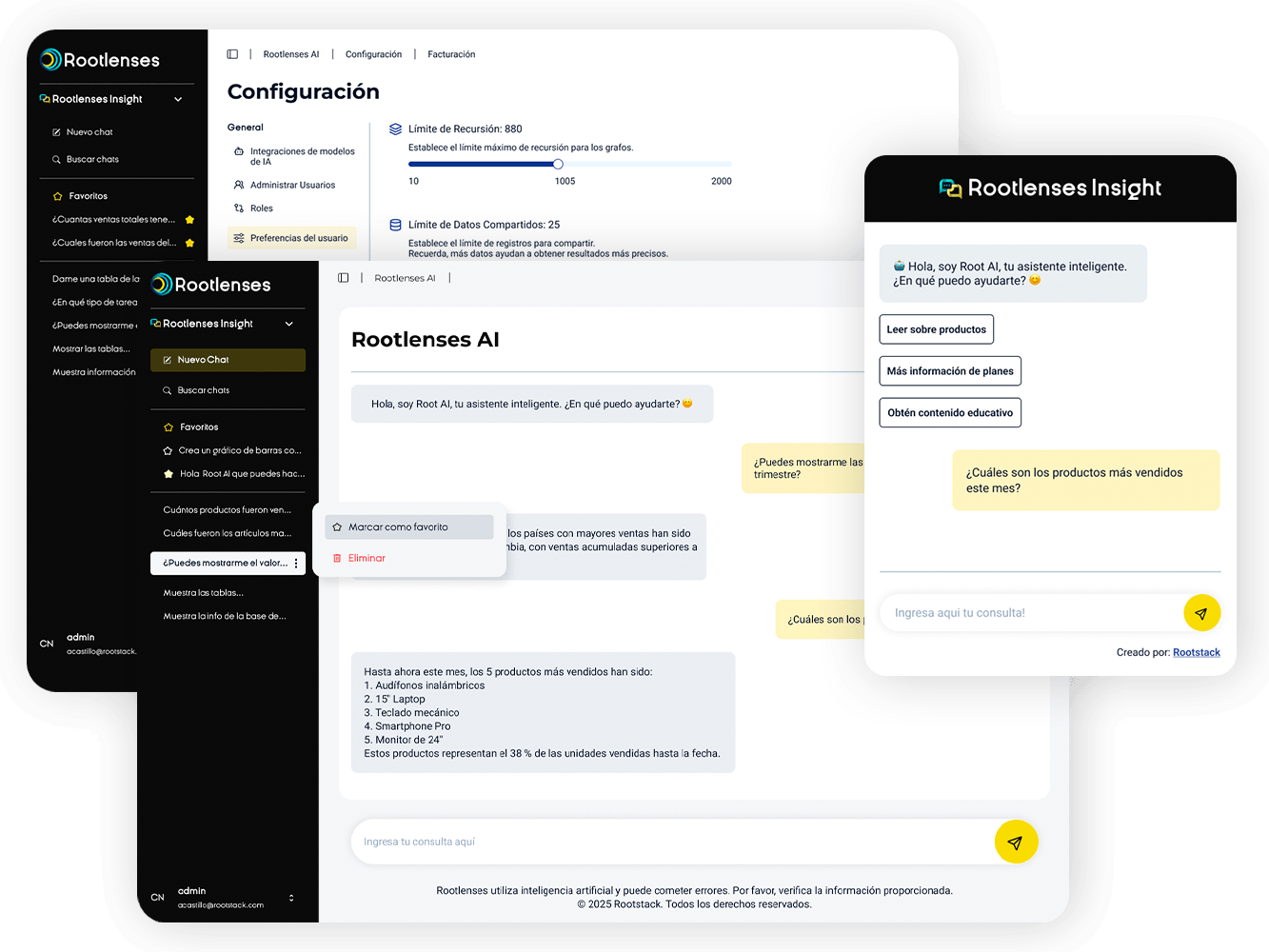
Rootlenses Insight is an AI-powered data analysis platform that lets users query enterprise databases using natural language, without relying on SQL queries written manually.
The tool turns users’ questions into optimized SQL queries and presents the results through answers, tables, charts, and reports. It also includes access controls, permissions, and traceability to help organizations manage how their information is queried.
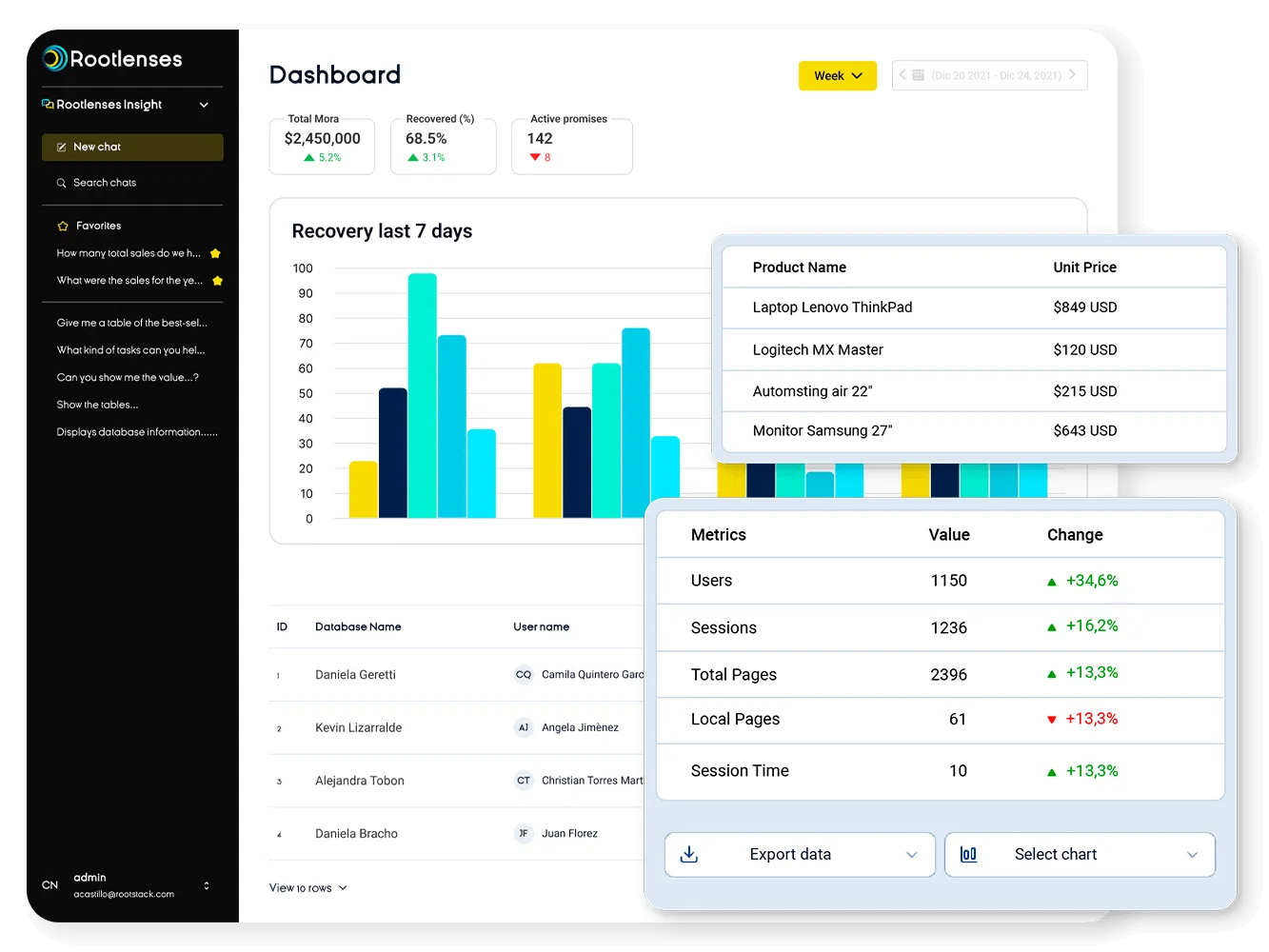
Its main capabilities include:
- AI-powered data analysis: ask questions in natural language and get answers based on your data sources.
- Automated SQL queries: turns business questions into executable queries without requiring every user to master SQL.
- Database connectivity: query compatible enterprise data sources from a single platform.
- Data visualization: generates tables and charts to make results easier to interpret.
- Report automation: reduces the manual work involved in preparing reports.
- Data governance: manages permissions, access levels, and query traceability.
These capabilities make Insight an option for organizations looking to expand access to their data and support decision-making based on up-to-date information.
Learn more about Rootlenses Insight.
What is Julius AI?
Julius AI is an AI-powered data analysis tool that lets users explore information, perform calculations, and create visualizations using natural-language prompts.
Users can work with files such as Excel and CSV, connect compatible data sources, and request analyses without having to code manually. The platform also offers features for generating reports, performing statistical analyses, and producing other deliverables.
Its capabilities include:
- Spreadsheet and dataset analysis.
- Chart and visualization generation.
- Data cleaning and preparation.
- Statistical analysis and modeling.
- Report generation and results export.
- Connections to certain databases and business services.
- Collaboration and team management features in its enterprise plans.
Julius has also expanded beyond data analysis, adding tools for research, presentations, and content creation.
Rootlenses Insight vs. Julius AI: comparison table
The main difference between the two tools lies in their use cases, data sources, and the control requirements each organization must meet.
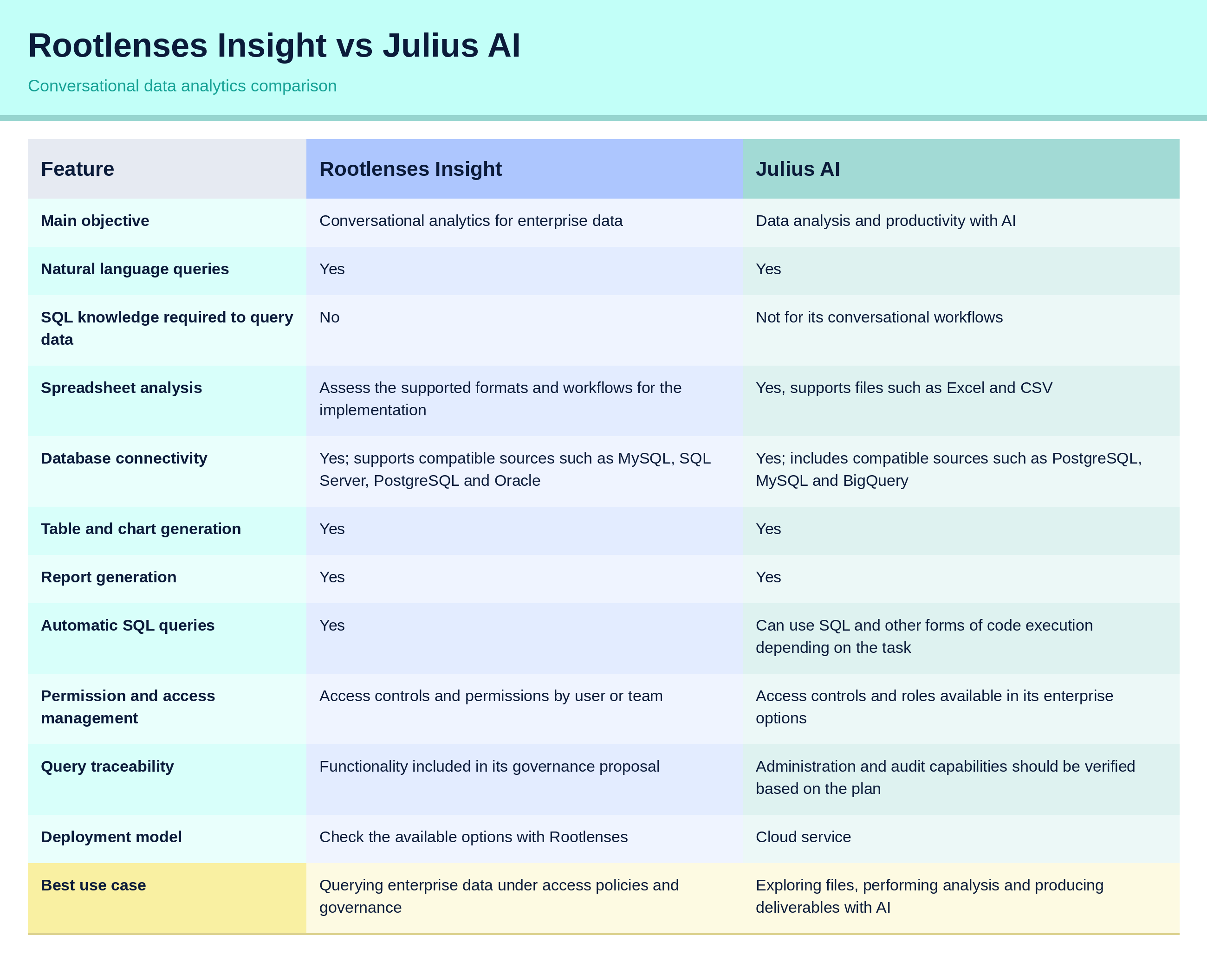
What are the main differences between Rootlenses Insight and Julius AI?
1. Enterprise database analysis
Both tools let users ask questions about data without manually writing code. However, the source of the information and how it is integrated into business processes are important factors when choosing a platform.
Rootlenses Insight is designed to query compatible enterprise databases using natural-language questions. The platform generates optimized SQL queries to retrieve authorized information and present results in a way business users can understand.
Julius AI lets users analyze files, spreadsheets, and various connected sources. It is a useful option for exploring datasets, investigating trends, and producing visualizations.
When should you choose Insight? When the goal is to provide conversational access to company databases and reduce reliance on technical teams to answer recurring questions.
2. Security, permissions, and data governance
Security is an essential consideration when artificial intelligence is incorporated into an organization’s internal processes.
Julius AI provides information about its security controls, encryption, and SOC 2 Type II certification, as well as enterprise access management features.
Rootlenses Insight emphasizes permissions, access control, and traceability for queries to enterprise data.
This distinction matters for organizations that need to define what information each user can query and maintain controls over how their data sources are used.
Before selecting a solution, it is worth validating aspects such as:
- Which users can access each information source.
- How permissions are enforced when queries are executed.
- Which logs are available for audits.
- How data is processed and stored.
- What deployment and infrastructure options each provider offers.
- Which compliance requirements the organization must meet.
When should you choose Insight? When data access management and query traceability are core project requirements. Specific security needs should be validated during a technical evaluation.
3. Report automation and data visualization
Creating reports may require gathering information from different sources, preparing queries, building charts, and explaining the results.
Both Rootlenses Insight and Julius AI aim to simplify this process with artificial intelligence.
Julius AI lets users analyze data and create visualizations, as well as generate other deliverables. Rootlenses Insight turns queries about enterprise data into answers, tables, charts, and reports that help teams interpret information.
The decision depends on the workflow you want to optimize: exploring files and conducting different analyses, or enabling recurring queries against the organization’s databases.
4. Accessing information without relying on SQL
One of the main benefits of AI-powered data analysis is that it allows more people to query information without learning programming languages.
For example, a sales manager might ask:
- Which products had the highest sales this quarter?
- Which regions recorded a decline in revenue?
- How has the profit margin changed over the past six months?
- Which customers account for the largest share of sales?
With a properly configured, connected data source, a conversational analytics tool can translate these questions into queries and results that make analysis easier.
Rootlenses Insight is designed to generate and execute optimized SQL queries against compatible sources. Julius AI also lets users analyze data through conversational prompts.
In both cases, answer quality depends on the structure, completeness, and availability of the data, as well as how questions are phrased.
Which AI-powered data analysis tool should you choose?
There is no single solution that fits every scenario. The choice should be based on the team’s needs, information sources, and the organization’s technical requirements.
Choose Julius AI if you need to:
- Analyze Excel and CSV files conversationally.
- Explore datasets to find patterns and trends.
- Perform statistical analyses and create visualizations.
- Generate reports and other deliverables with AI.
- Work in a space that combines data analysis with other productivity tools.
Consider Rootlenses Insight if you need to:
- Query enterprise databases using natural language.
- Make information accessible without requiring every user to know SQL.
- Generate optimized SQL queries from business questions.
- Get answers, tables, charts, and reports from compatible data sources.
- Manage information permissions and access.
- Add traceability and governance controls to data queries.
For companies evaluating enterprise AI solutions, it is also important to check compatibility with their current infrastructure, deployment conditions, compliance requirements, and total cost of ownership.
Why use Rootlenses Insight for enterprise data analysis?
The value of an AI analytics tool is not limited to generating quick answers. It should also help teams turn their questions into useful information for decision-making.
Rootlenses Insight aims to reduce the barriers between data and the people who need to use it.
Its offering combines natural-language queries, SQL generation, result visualization, and access controls to make enterprise information easier to analyze.
Potential applications include:
- Sales: query revenue, identify trends, and compare sales performance.
- Finance: explore financial indicators and analyze changes in results.
- Marketing: evaluate campaigns, channels, and acquisition metrics using connected sources.
- Operations: identify changes in operational indicators and query performance information.
- Business leadership: get answers to business questions without waiting for each report to be prepared manually.
These use cases depend on the available data, integrations, and platform configuration.
If your organization wants to expand access to its data while maintaining permissions and information control, learn about Rootlenses Insight and request a demo.
Frequently asked questions about Rootlenses Insight
How does Rootlenses Insight work?
Rootlenses Insight connects to compatible databases, analyzes their structure, and lets users ask questions in natural language. The AI generates and executes queries against authorized information and presents the results through answers, visualizations, and reports.
Do I need to know SQL or how to code to use Rootlenses Insight?
No. Rootlenses Insight lets users query enterprise data using natural-language questions, without manually writing SQL queries or having advanced programming skills.
Which databases can I connect to Rootlenses Insight?
Rootlenses Insight supports connections to enterprise databases such as MySQL, PostgreSQL, Microsoft SQL Server, and Oracle. Additional integrations depend on the connectors and implementation configuration.
What types of data can I analyze with Rootlenses Insight?
You can analyze structured business information related to sales, customers, marketing, finance, inventory, and operations, provided it is available in connected and authorized data sources.


