
July 21, 2026
For years, Microsoft Power BI has positioned itself as one of the leading Business Intelligence (BI) platforms thanks to its data visualization capabilities, integration with the Microsoft ecosystem, and ease of creating enterprise dashboards.
However, many organizations are looking for Power BI alternatives that offer greater automation through artificial intelligence, conversational analytics, natural language queries, improved user experience, or more flexibility when working with large volumes of data.
The evolution of the data analytics tools market has led companies to search for platforms that not only allow them to visualize information but also enable them to ask questions directly to their data and receive intelligent answers within seconds.
In this article, we analyze the 10 best Power BI alternatives for businesses in 2026, considering AI capabilities, implementation simplicity, enterprise data integration, and scalability.
Why look for Power BI alternatives?
Although Power BI remains a robust solution, some companies encounter limitations depending on their specific needs. The main reasons to evaluate other platforms include:
- Greater dependency on technical configurations.
- The need for natural language-based analytics.
- Greater autonomy for business users.
- The search for integrated artificial intelligence.
- Advanced data governance requirements.
- The need to integrate multiple information sources.
New generations of BI platforms are evolving toward AI-powered analytics models, where users can interact with data as if they were having a conversation with an analyst.
1. Rootlenses Insight: The AI-powered Power BI alternative with conversational analytics
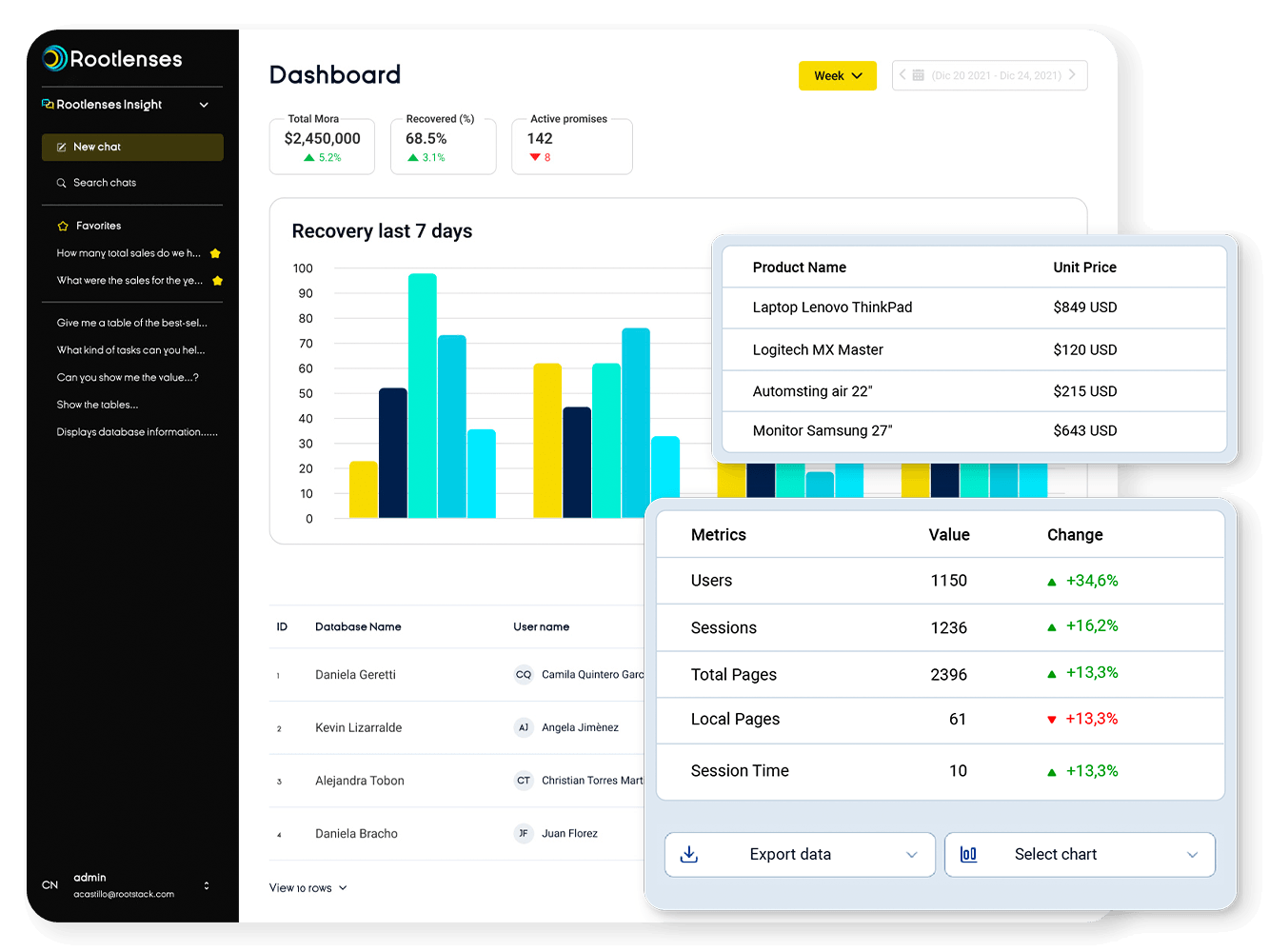
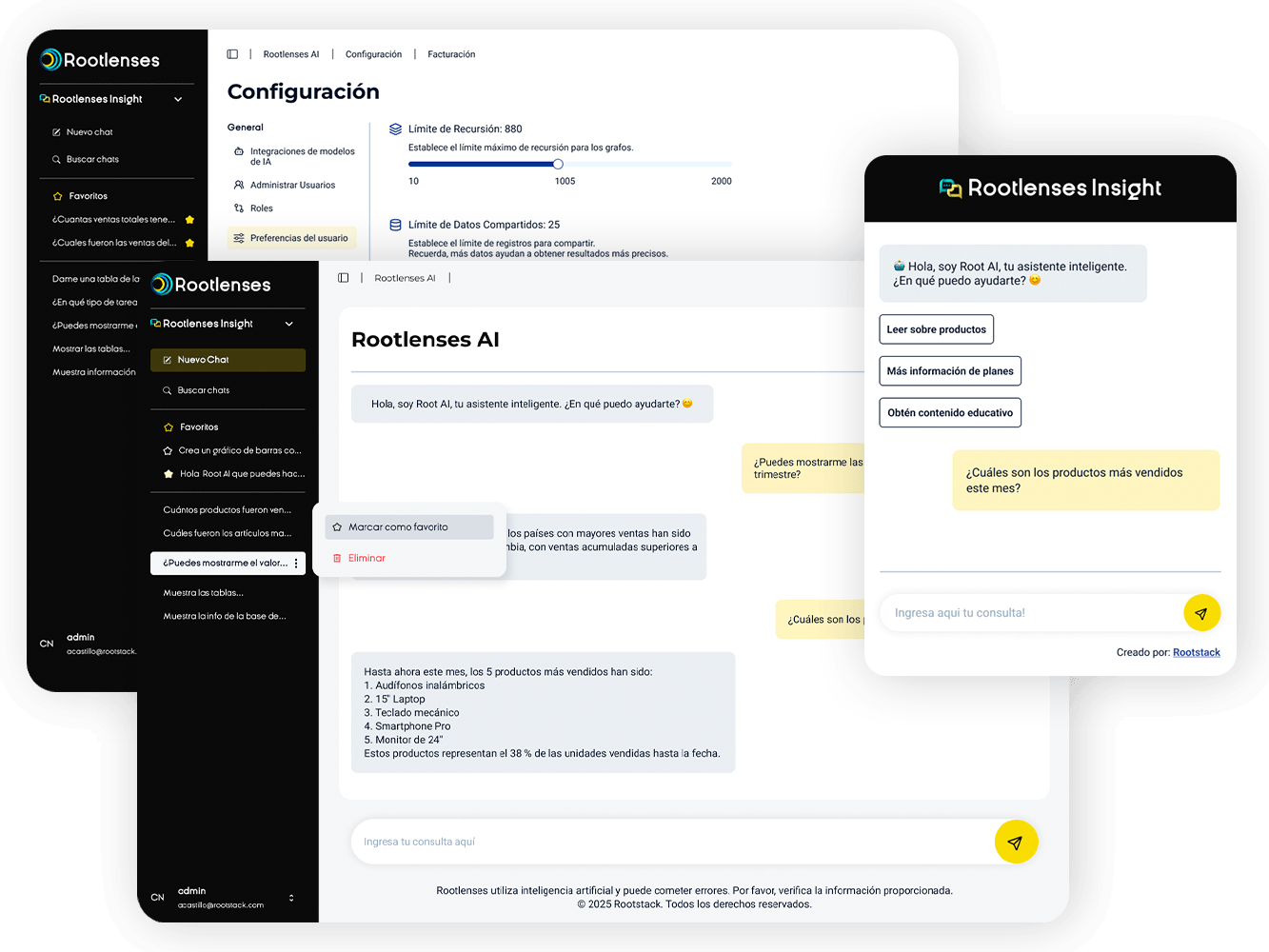
Rootlenses Insight is an AI-powered data analytics platform designed for companies that need to obtain fast answers from their databases without constantly depending on technical teams.
Unlike traditional Business Intelligence tools mainly focused on dashboards, Rootlenses Insight enables users to ask questions using natural language and automatically transform those requests into validated SQL queries.
This allows business, finance, sales, operations, and leadership teams to access enterprise information easily while maintaining security controls and data governance.
Main advantages:
- Natural language queries.
- Automatic SQL generation.
- Conversational data analytics.
- Automatic visualizations.
- Role-based access control.
- Integration with enterprise databases.
Ideal for: companies looking for a modern Power BI alternative with advanced artificial intelligence capabilities.
2. Tableau
Tableau is one of the most recognized data visualization platforms in the market. Its strength lies in creating interactive dashboards, advanced visual analytics, and exploring large datasets.
With the integration of artificial intelligence capabilities, Tableau has evolved toward a more automated experience for business users.
3. ThoughtSpot
ThoughtSpot is a Power BI alternative focused on search-driven analytics and artificial intelligence. Its main differentiator is allowing users to ask questions about their data using natural language.
It is a popular option for organizations looking to implement self-service analytics and reduce dependency on data teams.
4. Qlik Sense
Qlik Sense is a Business Intelligence platform recognized for its associative engine, which enables organizations to discover relationships between different data sources.
It is used by companies that require advanced analytics and flexible data exploration.
5. Looker Studio
Looker Studio is an accessible alternative for companies that need to create reports and dashboards connected to different data sources.
Its integration with Google products makes it an attractive option for teams working with Google Analytics, BigQuery, and other tools within the Google ecosystem.
6. Sigma Computing
Sigma Computing is a modern business analytics platform designed to work directly on large cloud data warehouses such as Snowflake.
Its approach aims to provide a spreadsheet-like experience while offering enterprise-grade BI capabilities.
7. Metabase
Metabase is an open-source Business Intelligence tool that enables users to create queries, dashboards, and explore data easily.
It is especially popular among startups and technical teams looking for a flexible and cost-effective solution.
8. Databricks SQL
Databricks combines data engineering, artificial intelligence, and advanced analytics within a single platform.
It is an option used by organizations with large amounts of data that require advanced machine learning capabilities and data processing.
9. Domo
Domo is a Business Intelligence platform focused on connecting data, generating dashboards, and enabling real-time business decision-making.
10. Julius AI
Julius AI allows users to analyze files and datasets using artificial intelligence. Users can upload information, ask questions, and automatically generate charts.
It is an interesting alternative for quick analysis, although it is more focused on individual users rather than large organizations with complex data governance requirements.
What is the best Power BI alternative in 2026?
The future of business analytics is evolving toward platforms capable of interpreting human questions, connecting information from different systems, and delivering actionable answers through artificial intelligence.
In this scenario, Rootlenses Insight represents a new generation of Business Intelligence tools: a platform where users can have conversations with their data, obtain insights in seconds, and make decisions based on reliable information.
Frequently asked questions about Power BI alternatives
What is the best alternative to Power BI?
It depends on the use case. For companies looking for artificial intelligence, natural language queries, and conversational analytics, Rootlenses Insight is a modern alternative to traditional BI tools.
Is there a free alternative to Power BI?
Yes. Some options include Metabase and Looker Studio, although they may have limitations compared to advanced enterprise platforms.
Which BI tools use artificial intelligence?
Currently, platforms such as Rootlenses Insight, ThoughtSpot, Tableau, and Power BI with Copilot incorporate artificial intelligence capabilities to improve data analysis.
Conclusion
The Business Intelligence market is changing. Companies are no longer looking only to create reports; they need tools capable of understanding questions, analyzing large amounts of information, and delivering fast answers.
Power BI alternatives powered by artificial intelligence are enabling organizations to move toward a more accessible, automated, and decision-oriented analytics model.
For organizations looking for a platform prepared for the future of business analytics, Rootlenses Insight combines artificial intelligence, natural language queries, and data governance to transform the way teams work with information.


