
October 9, 2026
Analyzing sales involves more than simply reviewing how much revenue your company generated last month. It also means understanding which products generate the most revenue, which customers purchase most frequently, why conversions are declining, and where opportunities exist to increase sales.
The challenge is that this information is often scattered across reports, spreadsheets, and different data sources. Interpreting it manually can be time-consuming and make it difficult to identify relevant patterns.
This is where artificial intelligence for sales analysis can make a difference. With tools like Rootlenses Insight, you can query your data using natural language, explore results, and obtain useful insights to guide your business decisions without having to write SQL queries.
In this guide, you'll find 20 prompts you can adapt to your business to analyze sales with AI, identify opportunities, and turn your data into actionable insights.
How to use AI to analyze your sales
Before getting started, make sure you have relevant, up-to-date data. Depending on the information available in your company, you can work with sales records, products, customers, sales representatives, sales channels, dates, prices, and profit margins.
With Rootlenses Insight, you can ask questions about your available data and explore the results further through additional queries.
To get better answers:
- Be specific: Indicate the period, metric, and dimension you want to analyze.
- Compare results: Request comparisons across months, products, teams, or channels.
- Look for explanations: Ask which factors might be associated with a change.
- Turn findings into action: Request recommendations based on the data analyzed.
- Validate the results: Check the figures, filters, and context before making decisions.
The following prompts are illustrative examples. You can copy them, modify the fields in brackets, and adapt them to the information available in your business.

1. Prompts to understand your overall sales performance
Before defining new strategies, you need to understand what's happening with your sales results. These prompts help you identify trends and detect important changes.
1. How have my sales evolved?
Prompt:
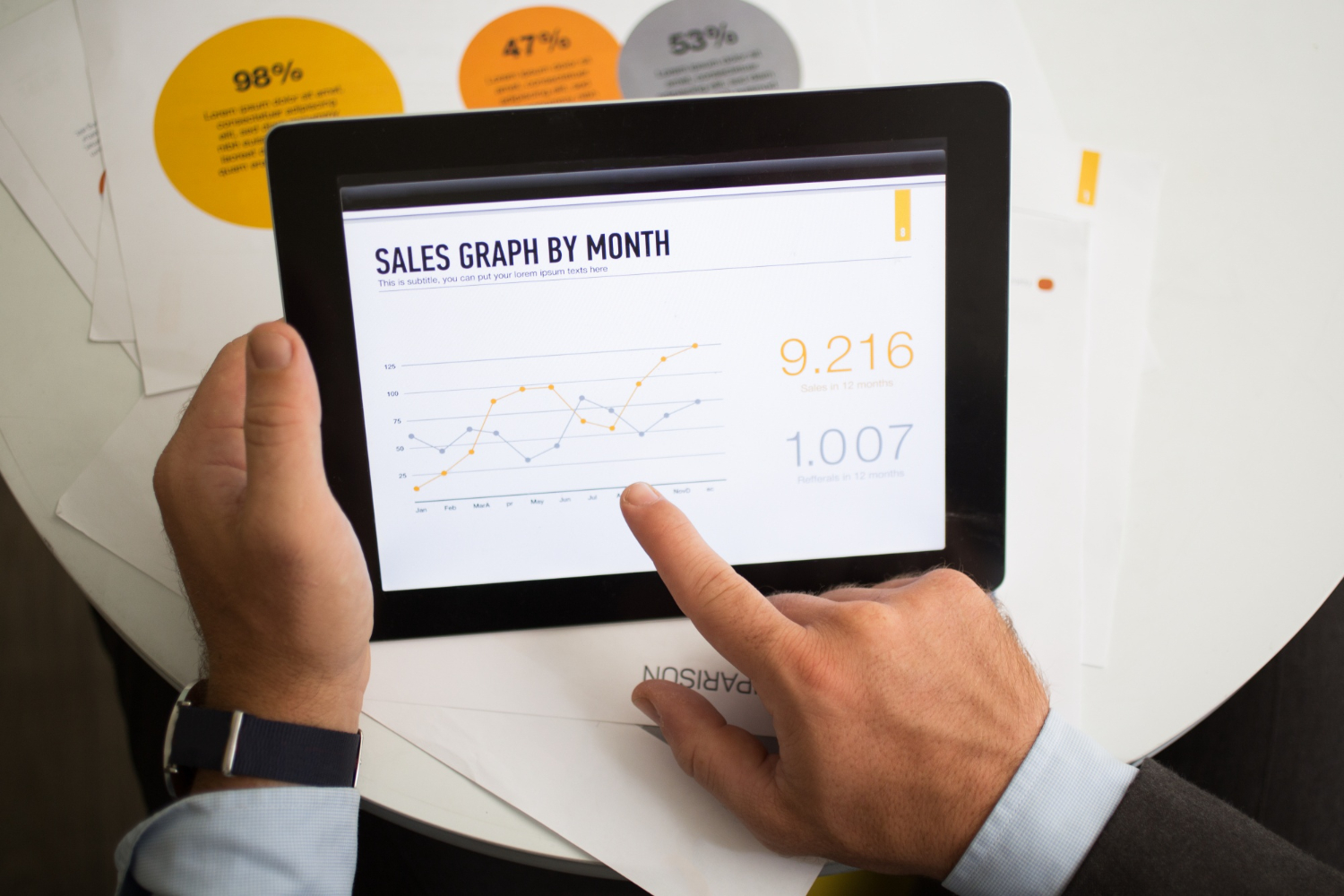
"Analyze my company's sales performance over the last [6 months]. Identify the main trends, the months with the highest and lowest revenue, and the percentage changes between periods. Summarize the most important findings and explain which aspects I should investigate."
What is it useful for?
It provides an overview of sales performance and helps identify changes that deserve attention. It's useful for preparing sales meetings, monthly reports, and performance reviews.
2. Am I meeting my sales targets?
Prompt:
"Compare actual sales for [period] against established sales targets. Calculate the target achievement rate, identify the gaps between expected and actual results, and highlight the teams, products, or regions with the largest gaps."
What is it useful for?
It helps determine whether the company is progressing as expected and where efforts should be focused to close sales performance gaps.
3. What factors are associated with a decline in sales?
Prompt:
"Analyze the sales decline recorded during [period]. Compare the results with [reference period] and break down the changes by product, category, region, channel, and sales representative, depending on the available data. Identify the segments contributing most to the decline and what additional information would be needed to determine its possible causes."
What is it useful for?
Instead of assuming why sales declined, you can identify where the change occurred and which variables are worth investigating.
4. What are my best sales periods?
Prompt:
"Identify the days, weeks, and months with the highest sales volume over the last [12 months]. Compare revenue, the number of transactions, and average purchase value. Detect recurring patterns and suggest how to leverage them when planning sales campaigns."
What is it useful for?
It helps you plan promotions, inventory, staffing, and sales activities based on observed patterns.
2. Prompts to identify profitable products and services
Not all products contribute the same value to a business. Some generate significant revenue, while others stand out because of their margins, growth, or ability to drive additional purchases.
5. Which products are my best sellers?
Prompt:
"Rank my products or services by units sold and revenue during [period]. Present a ranking of the top 10, identify those that have grown or declined compared with the previous period, and highlight the products that deserve sales attention."
What is it useful for?
It helps you identify which products drive sales and which are losing market share.
6. Which products generate the highest profitability?
Prompt:
"Analyze the profitability of my products using the available revenue and cost data. Calculate gross margin when possible, compare results by category, and create a classification distinguishing high-volume products, high-margin products, and underperforming products."
What is it useful for?
It helps distinguish products that sell the most from those that generate the highest profitability. Reliable cost data is required for this analysis.
7. Which products are losing demand?
Prompt:
"Compare the units sold and revenue for each product over the last [3 months] against the previous [3 months]. Identify the products with the largest declines, quantify the changes, and highlight those that require a review of pricing, promotions, availability, or sales strategy."
What is it useful for?
It helps detect products with declining performance early and prioritize follow-up actions.
8. Which products sell best together?
Prompt:
"Analyze the available transactions to identify products or services that are frequently purchased together. Present the most common combinations, indicate the number of transactions in which they appear, and suggest cross-selling, bundling, or promotional opportunities."
What is it useful for?
It can reveal opportunities to increase the value of each purchase. This analysis requires transaction data that makes it possible to link items included in the same order.
3. Prompts to get to know your customers better
Understanding who buys, how often they purchase, and how much they spend allows you to design more relevant sales strategies and improve customer retention.
9. Who are my most valuable customers?
Prompt:
"Segment my customers based on their cumulative revenue, purchase frequency, and average transaction value during [period]. Identify the segments that contribute the most revenue and explain what opportunities exist to strengthen the business relationship with each group."
What is it useful for?
It helps identify the customer segments that contribute most to revenue and guide customer loyalty initiatives.
10. Which customers have stopped buying?
Prompt:
"Identify customers who used to purchase regularly but have not made a purchase in the last [90 days]. Compare their historical behavior, estimate the sales value they represented, and create a prioritized list of customers for reactivation campaigns."
What is it useful for?
It helps identify potential customer win-back opportunities. The definition of inactivity should be adjusted to the typical purchasing cycle of each business.
11. How often do my customers make repeat purchases?
Prompt:
"Analyze my customers' purchase frequency over the last [12 months]. Calculate the average time between purchases when the data allows it, identify the segments with the highest repeat purchase rates, and highlight groups showing changes in their purchasing habits."
What is it useful for?
It helps identify repeat-purchase patterns and plan communications, reminders, and customer loyalty programs.
12. How much does each customer contribute to my business?
Prompt:
"Calculate each customer's contribution to sales during [period]. Identify what percentage of revenue comes from the top 10% of customers by revenue, assess the level of sales concentration, and highlight the associated risks and opportunities."
What is it useful for?
It allows you to assess your dependence on a small group of customers and explore opportunities to diversify revenue.
4. Prompts to improve your sales team's performance
Sales results also depend on how your sales team operates. Comparing performance helps identify best practices and detect where additional support is needed.
13. Which sales representatives perform best?
Prompt:
"Compare sales representatives' performance during [period] using revenue generated, number of sales, average transaction value, and target achievement, based on the available data. Present a contextualized ranking and identify relevant differences between individual results."
What is it useful for?
It provides a more comprehensive view of sales performance than revenue alone.
14. Where are there opportunities to improve sales?
Prompt:
"Analyze the sales team's results and identify sales representatives, regions, or segments with opportunities for improvement. Compare their results against targets and against groups with similar characteristics. Suggest training or follow-up actions that can be evaluated using specific metrics."
What is it useful for?
It helps direct sales support toward specific needs and measurable objectives.
15. Which regions or branches generate the most sales?
Prompt:
"Compare sales performance by region, branch, or territory during [period]. Analyze revenue, growth, number of transactions, and target achievement. Identify the best-performing markets and those with opportunities for improvement."
What is it useful for?
It makes it easier to allocate resources, identify best practices, and plan location-specific sales initiatives.
5. Prompts to optimize pricing, conversions, and opportunities
Once you understand your sales performance, you can explore the factors that influence purchasing decisions and business growth in greater depth.
16. How do discounts affect my sales?
Prompt:
"Analyze sales made with and without discounts during [period]. Compare revenue, units sold, and gross margin when cost data is available. Identify the products or segments where discounts coincide with better results and explain what information is needed to assess their actual impact on profitability."
What is it useful for?
It helps evaluate promotions beyond sales volume and identify when a discount could compromise profit margins.
17. Which sales channels generate the best results?
Prompt:
"Compare the performance of my sales channels during [period], including [available channels]. Analyze revenue, number of transactions, average purchase value, and growth. Identify the best-performing channels and opportunities to optimize sales investment."
What is it useful for?
It allows you to compare physical stores, digital channels, distributors, or direct sales, provided the data is available and comparable.
18. What opportunities exist to increase average purchase value?
Prompt:
"Calculate the average transaction value during [period] and compare it by customer segment, product category, and channel. Identify the segments with the highest and lowest values, and suggest upselling or cross-selling opportunities based on the observed patterns."
What is it useful for?
It helps explore ways to increase revenue per transaction without relying exclusively on acquiring new customers.
19. What growth opportunities can my data reveal?
Prompt:
"Analyze sales results by product, customer, region, and channel. Identify segments showing sustained growth, a high contribution to revenue, or potential for improvement compared with their previous results. Prioritize five sales opportunities based on their potential impact, the supporting data, and the information that is still missing."
What is it useful for?
It helps turn a general analysis into a list of opportunities that the team can investigate and prioritize.
20. What should I do to improve sales next month?
Prompt:
"Use sales history from the last [6 to 12 months] to identify trends, standout products, customer segments, and underperforming areas. Propose a sales plan for next month with five prioritized actions, the objective of each action, the metrics to track, and the data needed to evaluate results. Distinguish data-supported findings from hypotheses that need to be validated."
What is it useful for?
It connects analysis with sales planning. The recommendations can serve as a starting point for defining targets, campaigns, and follow-up actions.

How to turn these prompts into sales decisions
Asking questions is only the first step. The real value lies in using the answers to guide decisions and measure their results.
You can follow this process:
- Explore: Start with general questions to understand your sales performance.
- Dig deeper: Identify a change and request a breakdown by product, customer, sales representative, channel, or period.
- Validate: Review the figures and check whether the data supports the conclusions.
- Prioritize: Select the opportunities that are most relevant to your sales objectives.
- Measure: Define metrics and compare results after implementing the actions.
For example, if you detect a decline in sales for a category, you can investigate which products account for the decrease, which customers have reduced their purchases, and whether the change also appears in specific channels. From there, the team can evaluate targeted actions and measure their impact.
Remember that AI does not replace data validation or guarantee that a correlation represents a cause. The quality of the analysis depends on the available information, its consistency, and the business context.
Analyze your sales with AI using Rootlenses Insight
Your sales data can help you answer questions that go far beyond how much you sold last month.
Rootlenses Insight is an AI-powered data analytics tool that allows you to explore business information using natural language, without having to write SQL queries. This allows you to investigate trends, compare results, and discover analytical opportunities using the data available in your business.
Instead of relying exclusively on static reports, you can explore your questions further as new findings emerge and make it easier for business teams to get more value from their information.
Want to discover how to apply these use cases to your own data?
Request a demo of Rootlenses Insight and discover how artificial intelligence can help you analyze your sales and turn your data into better business decisions.


