September 29, 2026
Every collection call that is not made, is made too late, or is handled with the wrong tone is money that does not enter your cash flow. AI voice agents have become one of the most scalable ways to recover debts without expanding your team or putting compliance at risk.
In this guide, we explain how they work, what benefits they provide, and what regulations you need to consider.
What are AI voice agents for debt collection?
An AI voice agent is a conversational AI software that makes and receives calls autonomously. It identifies the right person, verifies the debt, communicates the required disclosures, and negotiates a payment.
If the case requires it, it escalates the conversation to a human collections agent. It is also known as a debt collection voicebot, virtual collections assistant, or voice bot for debt portfolio management. Unlike an IVR with rigid menus, it maintains a natural conversation and adapts to what the debtor says.
Why traditional debt collection is no longer enough
4.7% of household debt in the United States was in some stage of delinquency at the end of the second quarter of 2026, according to the Federal Reserve Bank of New York. Total household debt reached $18.8 trillion. Although the indicators remain stable, delinquent debt portfolios still require consistent and efficient debt collection management.
A traditional call center has clear limitations: limited operating hours, employee turnover, and payroll costs. As a result, many early-stage delinquency or low-balance accounts receive attention too late, precisely when the probability of debt recovery begins to decline.

Benefits of AI-powered debt collection
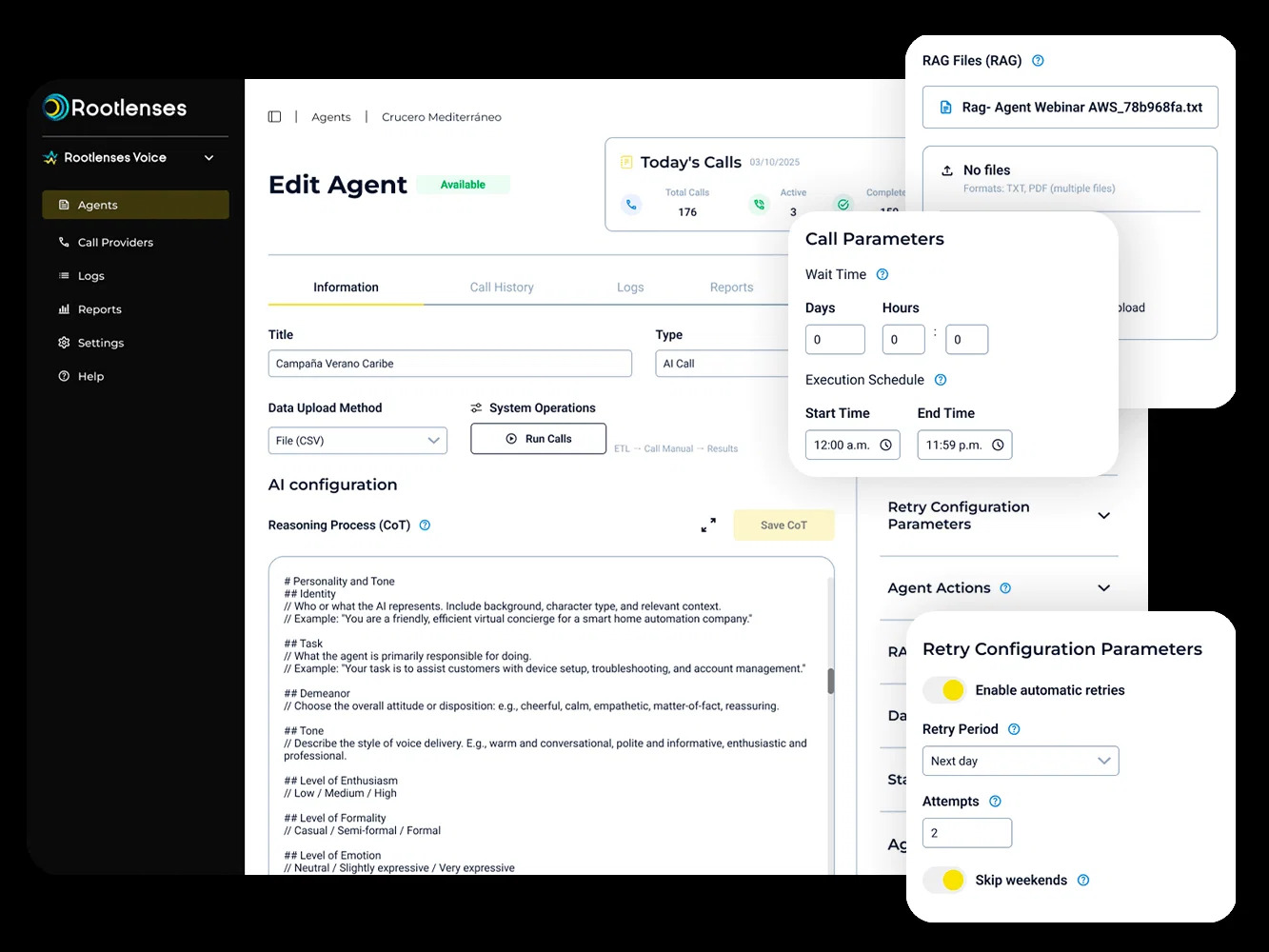
- Higher effective contact rates: the agent can call at times when the person is more likely to answer, retry intelligently, and operate within permitted calling windows.
- Preventive and early-stage collections: reminders before the due date and immediate follow-up after the first missed payment.
- Personalized payment arrangements: McKinsey notes that generative AI can identify suitable restructuring options and guide customers through the process.
- Lower operating costs: in its analysis of banking, McKinsey indicates that investments in voice bots target cost reductions of between 30% and 45%. These are reference targets, not guarantees: results depend on your portfolio and how you implement the technology.
- Consistent and empathetic tone: the agent does not get tired or frustrated and always follows the approved script.
- Complete traceability: every call is recorded and transcribed, making audits and payment promise analysis easier.
Regulatory compliance: the condition for automation
Automation does not mean bypassing the rules. Regulations apply equally to calls handled by humans and those handled by AI.
In the United States, the CFPB Debt Collection Rule (Regulation F) presumes a violation if a debt collector calls more than seven times within seven days regarding the same debt, or calls within seven days after a conversation about that debt.
In Mexico, CONDUSEF monitors debt collection practices. It can receive complaints about intimidating calls, calls made outside established hours, or calls in which the collection agency does not identify itself. In addition, financial institutions may be sanctioned if the collection agencies they hire fail to follow sound practices. During the first contact, collection agencies must provide information such as the agency's name, the financial institution that granted the credit, the amount owed, and the date on which the amount was calculated.
Therefore, a good voice agent should allow you to configure frequency limits, time windows by time zone, scripts approved by legal teams, and a complete record of every interaction. Regulations change frequently, so always verify current requirements with your legal team.
How to implement voice agents in your debt collection operation
- Segment your portfolio by delinquency age, amount, and payment profile.
- Define negotiation rules: discounts, payment terms, and minimum amounts the agent can offer.
- Configure compliance: call frequency, hours, identification, and disclosures.
- Integrate your systems: CRM, debt portfolio management system, and payment gateway, so every payment arrangement is recorded.
- Define human handoffs: disputes, vulnerable customers, or cases involving financial hardship should be transferred to a human agent.
- Measure and optimize: effective contact rate, payment promises, promise-to-pay fulfillment, and cost per dollar recovered.
Rootlenses Voice: conversational debt collection with control
AI-powered debt collection only works when the conversation feels natural and the business remains in control. That's where Rootlenses Voice, the AI voice agent pillar of Rootlenses, comes in. It is designed to help your team deploy agents that conduct phone conversations at scale, with clear rules and human oversight.
If your operation manages high volumes of debt recovery calls, Rootlenses Voice helps you increase coverage and speed without sacrificing customer experience or compliance.