October 12, 2026
What Are the Best AI-Powered Analytics Platforms for SMBs in 2026?
The best AI-powered analytics platforms for SMBs are those that enable businesses to transform data into actionable insights, automate reports, and identify trends without constantly relying on technical specialists.
Leading options include Rootlenses Insight, Microsoft Power BI, Tableau, Julius AI, Google Looker Studio, Zoho Analytics, and Qlik. Each tool addresses different needs, from analyzing spreadsheets to querying enterprise databases using natural language.
To choose a platform, small and medium-sized businesses should evaluate ease of use, supported data sources, artificial intelligence capabilities, security, scalability, and the total cost of implementation.
Comparison of the 7 Best AI-Powered Analytics Platforms for SMBs
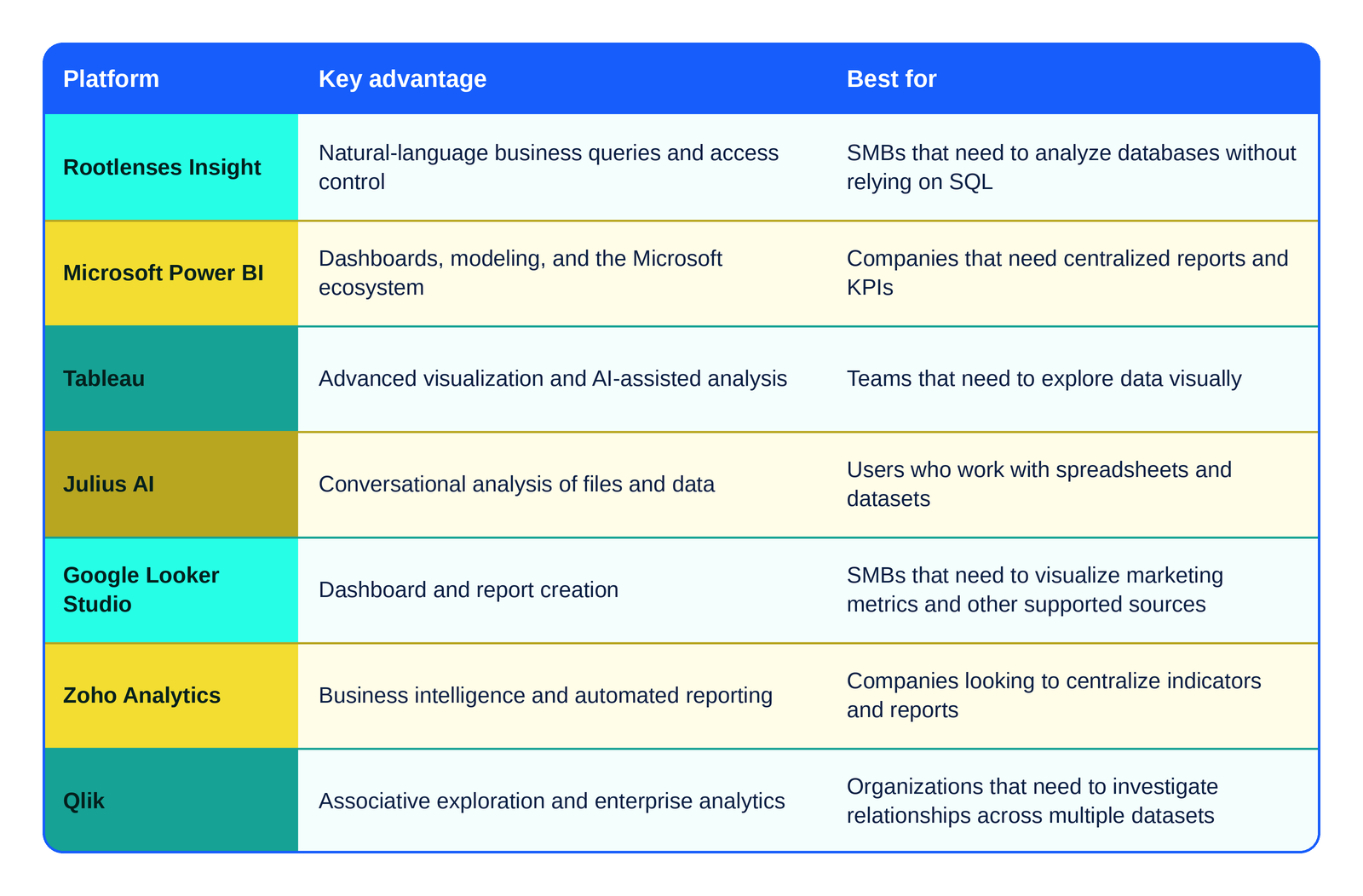
This comparison is intended as a general guide: the best option depends on each company's data sources, data volume, security requirements, and budget.
1. Rootlenses Insight: AI-Powered Database Analytics
Rootlenses Insight is an AI-powered business data analytics platform that allows users to query databases using natural language and obtain answers, tables, charts, and actionable insights without manually writing SQL.
It is designed for businesses that need to make their information more accessible without turning every business question into a request to the IT team.
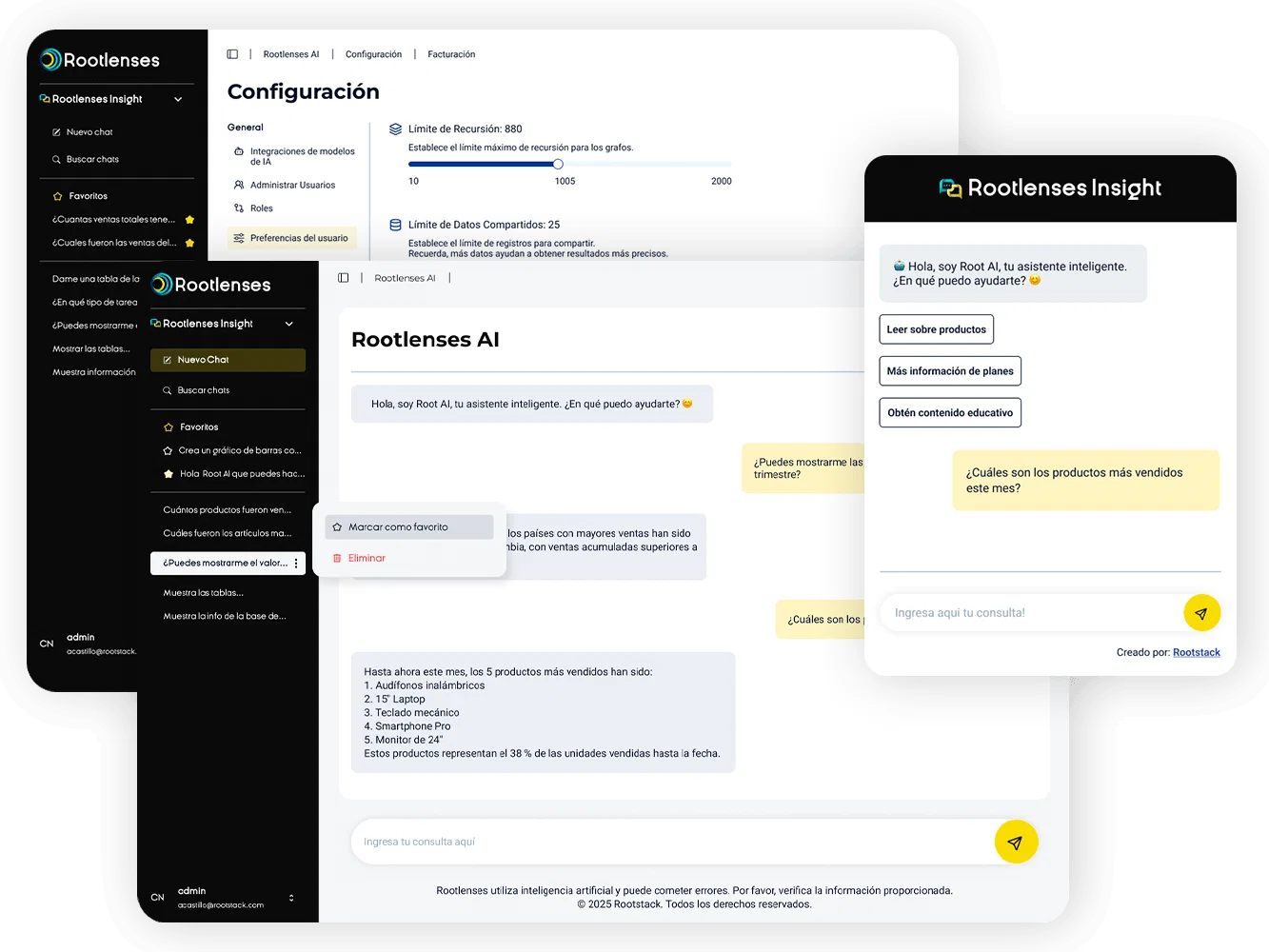
Its key capabilities include:
- Natural language queries converted into optimized SQL queries.
- Connections to databases such as MySQL, SQL Server, PostgreSQL, and Oracle.
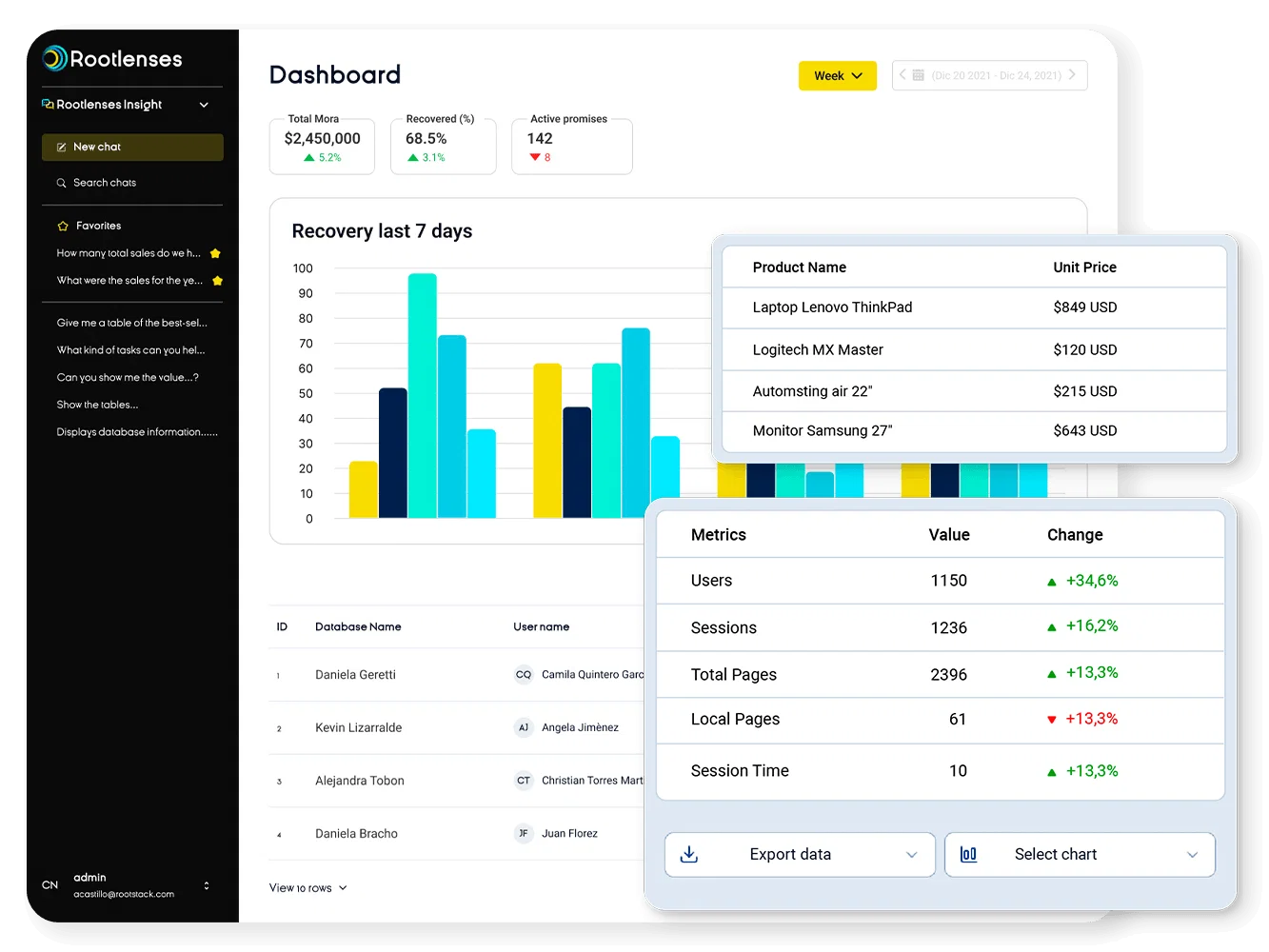
- Generation of answers, tables, charts, and reports.
- Role-based access controls and query traceability.
- Export of results in formats such as CSV, XLS, JPG, and PNG.
For example, a sales manager can ask which products sold the most during the month, while a finance manager can check outstanding payments, provided the relevant data is available and permissions are configured correctly.
Why choose Rootlenses Insight? Its main differentiator is conversational access to business data, supported by access controls and auditing. It is an option for SMBs that need to query operational databases and reduce their reliance on manual analysis and reporting processes.
2. Microsoft Power BI: Integrated Business Intelligence
Microsoft Power BI is a business intelligence platform that allows users to connect data sources, build data models, and create interactive dashboards. Its AI capabilities and Copilot help users explore data, generate visualizations, and obtain explanations in natural language, depending on the available licenses and configurations.
It is particularly useful for SMBs that already work with Excel, Microsoft 365, and other services within the Microsoft ecosystem.
Its main advantage is the combination of visualization, data modeling, and KPI distribution. However, configuring reliable data models and taking advantage of advanced features may require technical expertise.
3. Tableau: Advanced Visualization with AI
Tableau combines visual analytics, dashboards, and artificial intelligence features to help users explore trends and understand their KPIs. Its conversational capabilities and analytics assistants allow users to ask questions in natural language and obtain visualizations or explanations.
It is an option for businesses that need to explore relationships between variables and communicate results through interactive charts.
The main considerations are the learning curve and the total cost associated with licenses, data preparation, and administration. For an SMB with basic needs, it may offer more functionality than necessary.
4. Julius AI: Conversational File Analysis
Julius AI allows users to analyze datasets and files using natural language instructions. It can help interpret spreadsheets, generate charts, and explore information without requiring users to program every analysis.
It is suitable for professionals who work with Excel, CSV, and other datasets and need to answer questions quickly.
The key difference lies in the source of the data: the needs of someone analyzing occasional files are not the same as those of a business that needs to query operational databases, manage permissions, and maintain traceability.
5. Google Looker Studio: Dashboards for KPI Visualization
Google Looker Studio allows users to create reports and dashboards from compatible data sources. It is useful for SMBs that need to visualize marketing metrics, website traffic, campaign performance, and business results.
Its strength lies in making it easy to present metrics in shareable reports. However, it is important to distinguish between a visualization tool and a conversational analytics platform: dashboard functionality alone is not equivalent to querying enterprise databases using an AI assistant.
It is an option for teams that prioritize visual KPI tracking and report distribution.
6. Zoho Analytics: Business Reporting and Analytics
Zoho Analytics offers business intelligence, visualization, data integration, and AI-assisted analytics capabilities. It can help consolidate KPIs across different departments and simplify report creation for teams looking to centralize their information.
It is particularly relevant for SMBs that already use Zoho applications or need a BI platform with self-service capabilities.
Before purchasing a subscription, it is worth reviewing the required connectors, the features included in each plan, and any limits on data volume and users.
7. Qlik: Data Exploration and Business Analytics
Qlik offers tools for integrating, exploring, and analyzing business information. Its associative analytics approach allows users to investigate relationships between different variables and discover patterns that might go unnoticed in traditional reports.
It is an option for businesses with multiple information sources and analytical needs that may become more complex over time.
For an SMB, the evaluation should consider both analytics capabilities and implementation, administration, and training requirements.
How to Choose an AI-Powered Analytics Platform for an SMB
Before purchasing a solution, it is worth answering five questions:
- Where is your data stored? Identify whether the information is stored in Excel files, CRM systems, marketing applications, or operational databases.
- Who needs access to it? Determine whether it will be used by an analyst alone or whether sales, finance, operations, and management teams also need access.
- What do you want to automate? Define whether the goal is to build dashboards, analyze files, query databases, or generate recurring reports.
- What security requirements apply? Review permissions, traceability, data handling policies, and deployment options.
- What is the total cost? Consider licenses, implementation, integration, training, and maintenance.
A practical recommendation is to start with a specific use case, such as analyzing sales, identifying slow-moving products, or checking accounts receivable. Then measure the time required to obtain answers, the accuracy of the results, and the maintenance effort involved.
What Are the Benefits of AI-Powered Data Analytics for SMBs?
AI-powered analytics platforms can help small and medium-sized businesses:
- Reduce manual tasks: Speed up report preparation and recurring queries.
- Democratize data access: Enable more people to ask business questions without writing code.
- Identify trends: Explore changes in sales, costs, inventory, and customer behavior.
- Improve decision-making: Complement managers' experience with quantitative evidence.
- Strengthen information control: Apply permissions and policies according to each platform's capabilities.
These benefits are not automatic. They depend on data quality, solution configuration, response validation, and adoption by teams.
Conclusion: What Is the Best AI-Powered Analytics Platform for SMBs?
The best platform depends on the problem the business needs to solve.
Rootlenses Insight stands out when the priority is to query enterprise databases using natural language, generate results, and facilitate access to information with access controls and traceability. This approach can be particularly relevant for SMBs that need to reduce their reliance on manual SQL queries and speed up responses to operational questions.
The final decision should be based on a trial using real business data and questions, validating accuracy, security, ease of use, and total cost before scaling the solution.


