October 12, 2026
What Does It Mean to Query Databases with AI?
Querying databases with AI involves using artificial intelligence to access, analyze, and interpret business information by asking questions in natural language, without needing to master SQL or other programming languages.
Instead of asking a technical team to build a query, a user can ask, “Which were our best-selling products during the last quarter?” and receive an answer based on the available data, provided the system has authorized access to the relevant sources.
This technology allows sales, finance, operations, and management teams to access business information more directly, streamline analysis, and make data-driven decisions.
Rootlenses Insight is an AI-powered data analytics solution that enables users to query business information using natural language, making data more accessible without manually writing SQL queries.
How Does Artificial Intelligence Work for Database Queries?
AI tools for querying databases combine language models, query interpretation mechanisms, and connections to structured information sources.
Although the architecture varies by platform, the process generally involves five stages:
- Question interpretation: AI identifies the information the user needs, the metrics to retrieve, and the filters to apply.
- Query translation: When applicable, the system converts the question into a structured query, such as SQL, that is compatible with the data source.
- Controlled execution: The query runs through an authorized connection, respecting configured permissions and restrictions.
- Results interpretation: The retrieved information is organized to answer the original question in an understandable way.
- Information presentation: Depending on its features, the platform can display results in tables, charts, or natural-language explanations.
For example, in response to the question, “Which region experienced the largest sales decline this month?”, the system can identify the sales metric, compare results by region, and present the differences it finds.
Accuracy depends on data quality, clearly defined metrics, available context, and the correct interpretation of the question.
What Do You Need to Query a Database with AI?
When implementing this type of solution in a business, it is important to consider the following components:
- Accessible data sources: SQL databases, data warehouses, or other sources compatible with the platform.
- Secure connections: Authentication and communication mechanisms that allow authorized information to be queried.
- Business context: Clear definitions of metrics, tables, fields, and relationships between data points.
- Natural language processing: The ability to transform everyday questions into query operations the system can understand.
- Access controls and auditing: User-level permissions, query restrictions, and activity logs when supported by the platform.
Not all tools require users to configure these components directly. However, businesses must verify that the solution integrates with their infrastructure and meets their security requirements.
Examples of Questions for Querying Databases with AI
One of the main advantages of querying databases with AI is that users can explore information without understanding the technical structure of database tables.
Here are some examples of business-related questions:
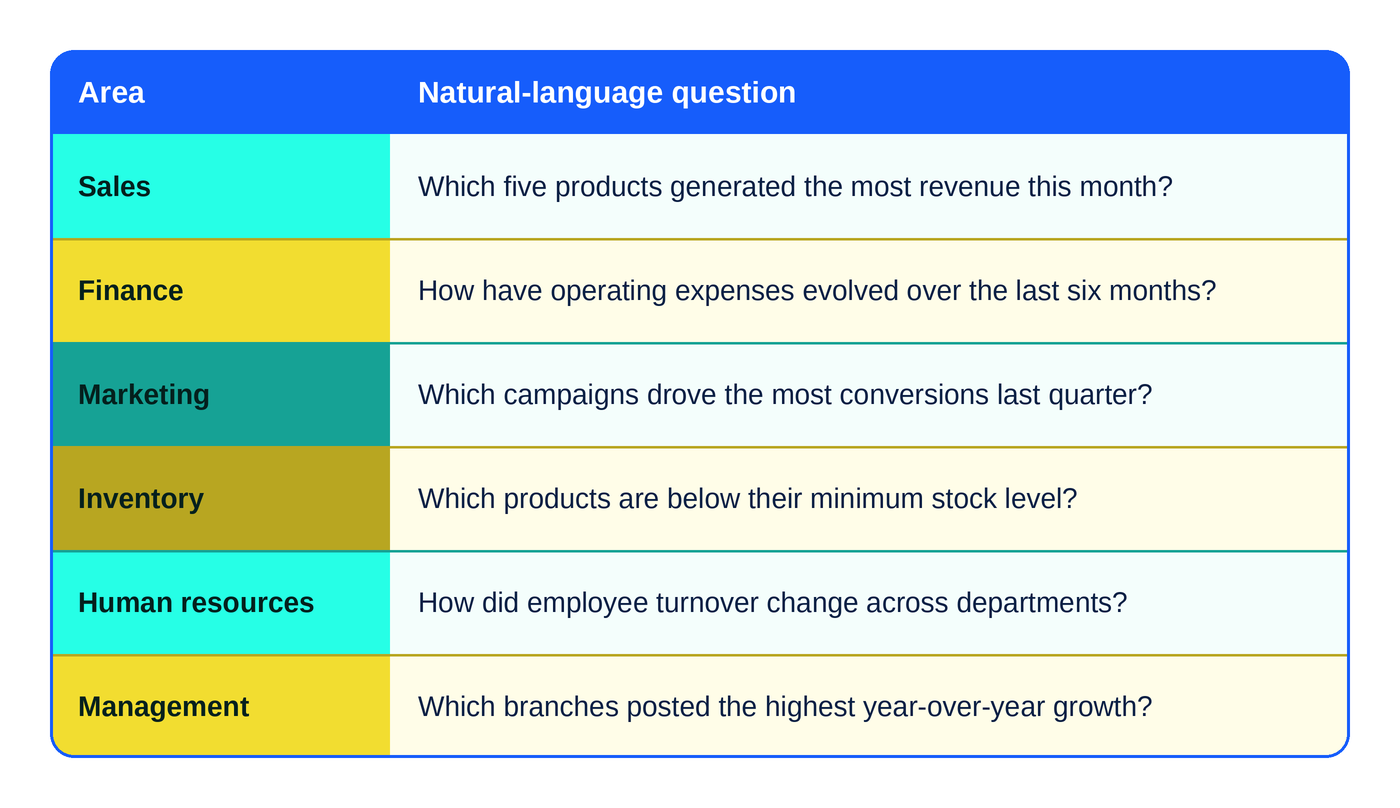
These questions make it possible to explore trends, compare periods, identify differences, and uncover potential improvement opportunities.
To obtain reliable results, it is advisable to specify the period, metric, and comparison criteria. For example, “sales” may refer to gross revenue, net revenue, or units sold. A precise definition helps prevent incorrect interpretations.
Benefits of Querying Databases with Artificial Intelligence
1. Less Dependence on SQL
Business users can ask questions directly without having to write manual queries or request every analysis from the data team.
2. Faster Access to Information
Natural-language queries can reduce the steps required to retrieve metrics and compare results. Actual time savings depend on the complexity of the questions and the existing infrastructure.
3. Greater Team Autonomy
Sales, finance, and operations teams can explore information relevant to their responsibilities without constantly relying on technical specialists.
4. Better Use of Business Data
A conversational interface can make it easier for more employees to use available information, identify patterns, and ask new questions based on the results.
5. More Accessible Analytics
Presenting results through tables, charts, and explanations makes information easier to understand for people without data analytics experience.
Is It Safe to Query Business Databases with AI?
Security depends on how the tool connects to information sources, where queries are processed, and which controls it applies.
Before implementing a solution, businesses should evaluate five aspects:
- Access control: Each user should only be able to query information they are authorized to access.
- Data protection: Measures must be in place to prevent the accidental exposure of confidential information.
- Query validation: It is advisable to restrict permitted operations and prevent unauthorized modifications or deletions.
- Traceability: Activity logs help identify who submitted a query and which operations were executed.
- Processing architecture: It is important to understand whether data is sent to external services or remains within a controlled environment.
Using artificial intelligence does not automatically guarantee security. Businesses must verify the platform's actual capabilities, data handling policies, and control mechanisms.
Rootlenses Insight: Query Your Business Data Using Natural Language
Rootlenses Insight is an AI-powered data analytics solution designed to make business information more accessible through natural-language questions.
Instead of relying exclusively on SQL queries or requests to the technical team, users can ask questions about their data and obtain structured information to support their decisions.
Its capabilities include querying business information, presenting results through tables and charts, and analyzing data from connected sources, depending on the available configuration and permissions.
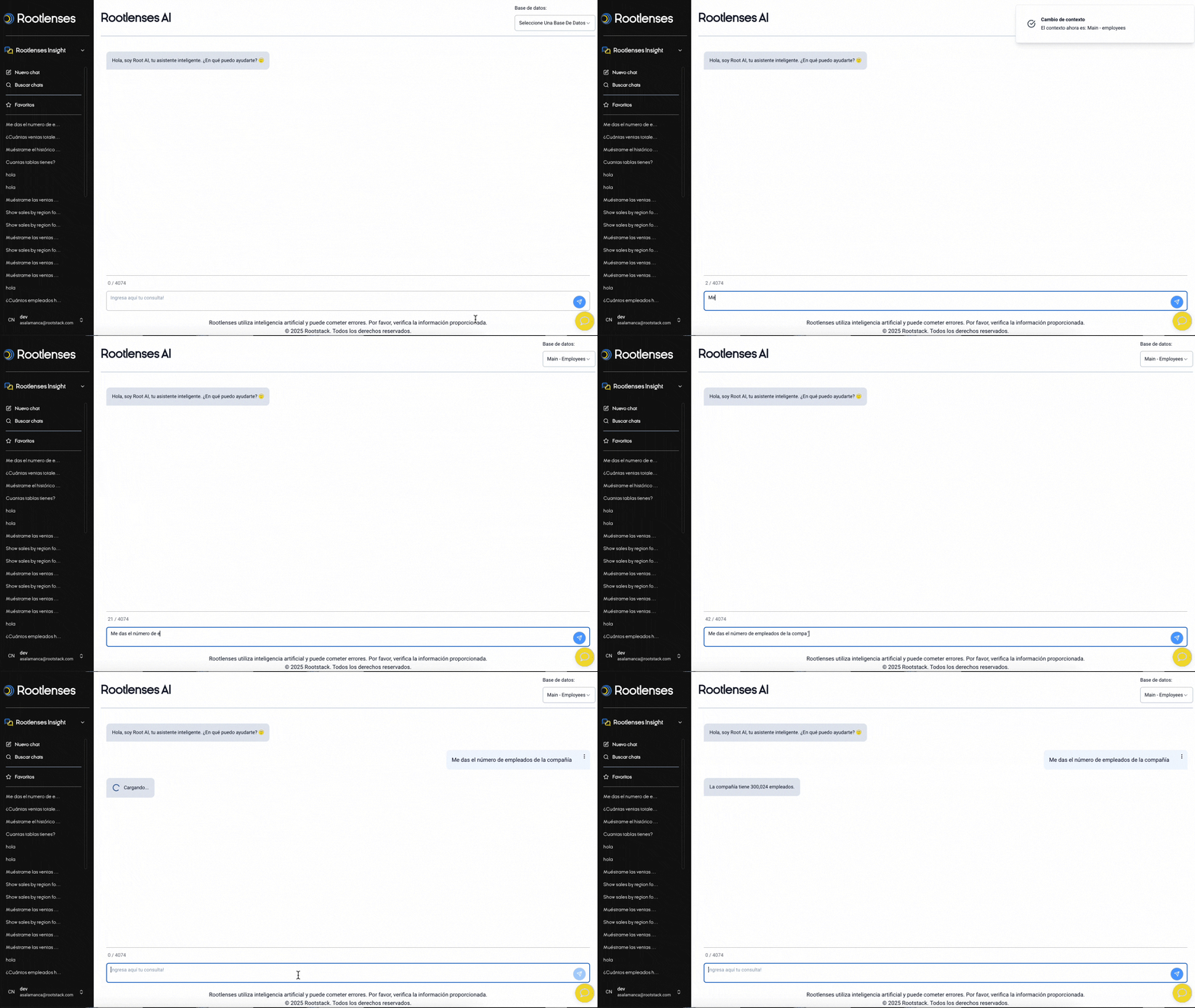
One relevant aspect of its approach is the local processing of queries against data, designed to prevent databases from being exposed directly to external language models. The architecture and deployment conditions should be evaluated according to each organization's specific requirements.
Rootlenses Insight aims to bring data analytics closer to business teams and help turn available information into useful answers for day-to-day operations.
Want to query your databases without relying on SQL? Discover how Rootlenses Insight can make your business data more accessible and request a demo to explore its capabilities.
Frequently Asked Questions About Querying Databases with AI
Can You Query a Database with AI Without Knowing SQL?
Yes. Tools that support natural-language queries allow users to ask everyday questions and translate them into operations compatible with connected data sources. Initial configuration may require technical support.
Which Databases Can Be Queried with Artificial Intelligence?
It depends on each platform's connectors and capabilities. Some solutions support relational databases, data warehouses, and other structured sources. Before choosing a tool, it is necessary to confirm compatibility with the business infrastructure.
Can AI Make Mistakes When Querying Data?
Yes. It may misinterpret a question, select an inappropriate metric, or generate an incorrect query. Validating results, providing business context, and implementing technical controls help reduce these risks.
Is It Necessary to Send the Entire Database to an AI Model?
Not necessarily. Some architectures process queries through controlled connections and send only the context or results required. Others may transmit information to external services. The answer depends on the solution's architecture.
What Is the Difference Between Querying Databases with AI and Using a Traditional Chatbot?
A traditional chatbot primarily responds based on the knowledge and context available to it. An AI solution connected to databases can query authorized, up-to-date business information, execute operations on that information, and generate answers based on the results obtained.
Which Businesses Can Benefit from Querying Databases with AI?
It is particularly useful for organizations that handle large volumes of information and need to make their metrics more accessible. It can benefit businesses in retail, banking, healthcare, logistics, manufacturing, and services, provided their data is available and the solution meets their requirements.
```


