
February 6, 2026
In the financial sector, the 80/20 rule is often an unavoidable operational reality: a small portion of the customer portfolio generates the majority of net margin, while a hidden segment consumes operational resources and increases credit risk.
For CFOs, Risk Managers, and FP&A leaders, the challenge is not only understanding the balance sheet, but identifying with surgical precision who is who within that vast pool of data.
Historically, segmenting customers by true profitability or imminent risk has required manual-intensive processes, heavy reliance on IT teams, and static models that quickly become outdated.
However, applying Artificial Intelligence (AI) to a bank’s or fintech’s internal data now makes it possible to perform this analysis instantly.
Tools like Rootlenses Insight act as conversational financial analysts, enabling leaders to detect complex patterns without code or additional infrastructure.
The trap of averages in profitability
Relying on average metrics is one of the greatest risks in portfolio management. A healthy average revenue per user (ARPU) can conceal two opposing realities:
- High-value customers: Users with high transaction volumes, stable balances, and low servicing costs.
- Value-destroying customers: Users who generate revenue but whose operational costs (support, cash management, claims) or default risk exceed the margin they contribute.
Traditional financial analytics, based on spreadsheets and static BI reports, typically show what happened last month. They lack the ability to dynamically correlate behavioral variables (usage frequency, changes in payment patterns) with hard financial data to project Customer Lifetime Value (LTV) or the future risk of a specific customer.
From “dead data” to active intelligence
The gap between data accumulation and strategic decision-making is the main obstacle in modern banking.
Financial institutions hold terabytes of transactional information, yet accessing it to answer complex questions often requires IT tickets and weeks of waiting.
Applied AI solves this problem by connecting directly to databases and transforming raw information into accessible insights. It is not about replacing human judgment, but accelerating access to the information that supports it.
By using conversational AI tools, financial teams can perform dynamic segmentations based on current behavior, not just historical demographic data. This enables them to:
- Prioritize retention efforts for customers with the highest projected LTV.
- Adjust credit limits based on real-time behavioral changes.
- Identify operational inefficiencies linked to specific customer segments.
Rootlenses Insight: A conversational financial analyst
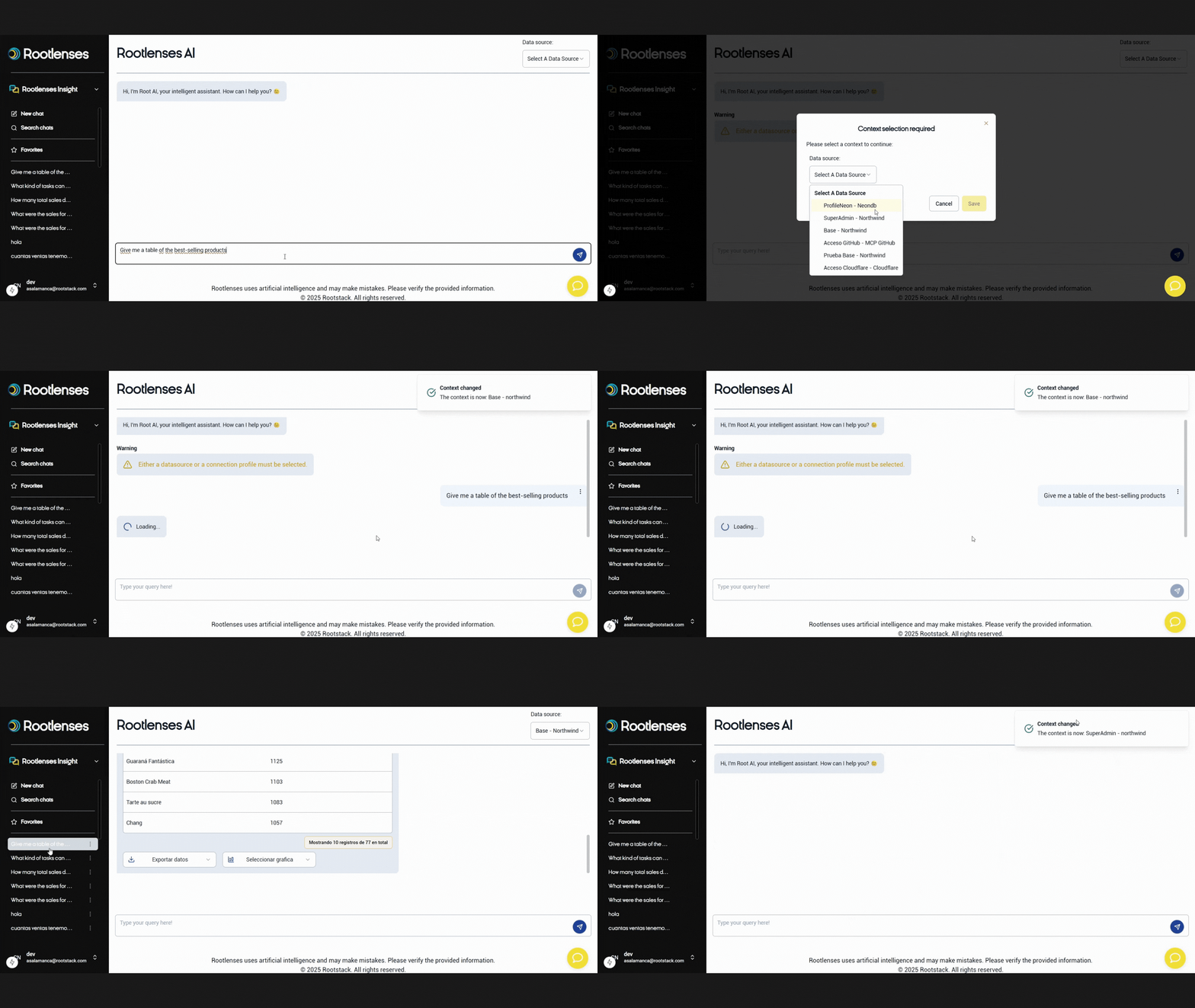
Rootlenses Insight operates as a tool that democratizes access to advanced analytics across the financial organization.
Unlike difficult-to-audit “black box” models, this solution connects directly to the company’s databases and allows users to interact with information through natural language questions in a chat interface.
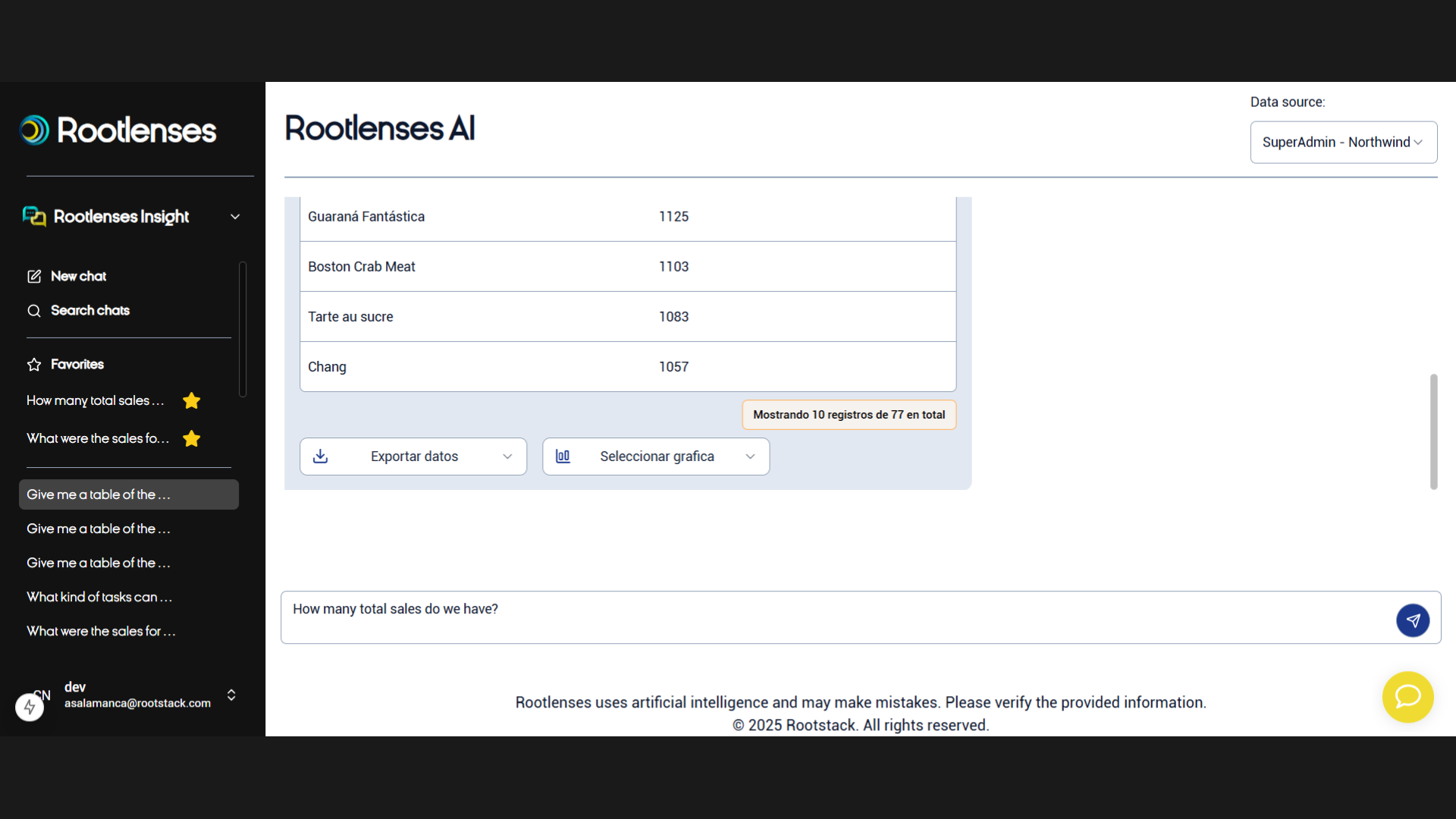
For a Head of Planning or a Risk Manager, this means the ability to interrogate data directly. The tool interprets the query, processes internal data, and returns precise answers, charts, or tables.
Key capabilities for financial teams:
- Direct connectivity: Integrates with existing data infrastructure without requiring data migration.
- Ad-hoc queries: Enables questions such as “Which customers have experienced the largest decline in average balance over the last quarter?” and delivers immediate results.
- Decision agility: Removes technical intermediaries from reporting workflows, reducing analysis time from weeks to minutes.
Use cases: Profitability and risk
The practical application of this technology directly impacts both the income statement and portfolio quality. Below are specific scenarios where conversational AI delivers immediate value:
1. Early churn detection among VIP customers
Losing a corporate or private banking customer has a disproportionate impact on profitability. Traditional models detect churn only after the customer has already withdrawn funds.
With Rootlenses Insight, executives can monitor subtle patterns such as a gradual decline in transaction activity or the cancellation of ancillary products, allowing banks to act proactively with personalized retention strategies before the customer exits.
2. Portfolio cleanup and risk management
Credit risk is not static. A customer may have a strong credit score at origination, yet their financial behavior can deteriorate months before delinquency occurs.
AI makes it possible to identify customers who, while still current, exhibit risky behaviors such as maxing out revolving credit lines or an increase in failed automatic payments. This enables risk teams to adjust provisions or limit exposure proactively.
3. True profitability analysis (Net Margin Analysis)
Beyond gross revenue, the tool allows teams to cross-reference income data with direct and indirect costs assigned to each customer.
FP&A teams can quickly identify customer segments that, despite high billing volumes, generate negative margins due to excessive operational costs. This insight is critical for restructuring pricing or migrating users to lower-cost service channels.
Toward proactive financial management with AI
Adopting AI within financial departments marks the transition from a reporting function to a strategic one. The ability to instantly distinguish between a value-creating customer and a value-destroying one is the ultimate competitive advantage in a saturated market.
Tools like Rootlenses Insight remove the technical barrier to data analysis. By enabling financial experts to interact directly with their information, institutions can manage risk and profitability with a level of precision and speed that traditional methods cannot match.


