
December 15, 2025
2026 will mark a turning point in how companies manage customer communication. Intelligent voice agents powered by artificial intelligence will move from being a competitive advantage to becoming an operational standard. Organizations that prepare today will be better positioned to scale, reduce costs, and deliver faster, more personalized experiences.
This practical guide is designed for companies considering the adoption of Rootlenses Voice as part of their automation strategy. You’ll find clear signals, actionable recommendations, concrete benefits, and a realistic adoption roadmap with projections for 2026.
The Accelerated Growth of AI Agents in 2025
Throughout 2025, AI-powered voice agents evolved far beyond basic IVR systems. They became conversational assistants capable of:
- Holding natural, contextual conversations.
- Understanding intent, tone, and urgency.
- Integrating with CRMs, ERPs, and internal systems.
- Resolving requests without human intervention.
This acceleration was driven by three key factors:
- Maturity of conversational AI: more accurate models trained on real business use cases.
- Operational efficiency pressure: overloaded support teams and rising costs.
- Rising customer expectations: 24/7 availability, instant responses, and frictionless experiences.
By the end of 2025, many companies were already using AI agents for inbound calls, payment reminders, confirmations, first-level support, and sales follow-ups. In 2026, the technology gap will be evident for those who delay adoption.
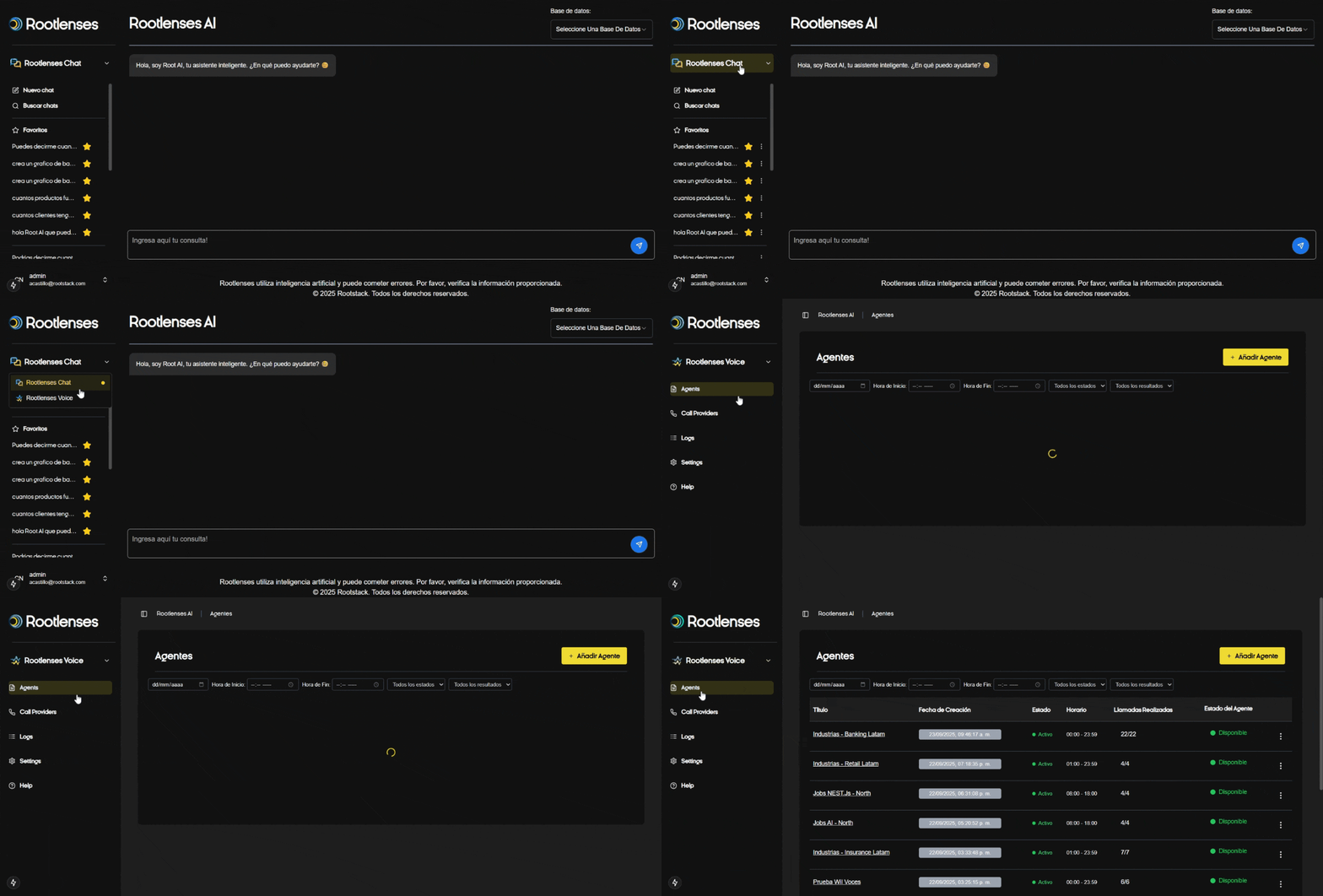
Signs Your Company Needs Automation in 2026
If your organization shows one or more of the following signals, it’s time to act:
- High volume of repetitive calls consuming your team’s time.
- Long wait times or missed calls.
- Rising call center costs without proportional improvements in experience.
- Difficulty scaling support during demand peaks.
- Manual processes for scheduling, confirmations, or follow-ups.
- Limited visibility into call metrics, reasons, and outcomes.
Automation with intelligent voice agents is not about replacing human teams, but about freeing them to focus on higher-value interactions. In 2026, the most efficient companies will strategically combine human talent with AI.
Processes to Prepare Before Integrating an AI Agent
Before implementing an intelligent voice agent, it’s essential to prepare the foundation. Practical recommendations include:
1. Map Your Call Processes
Identify:
The most frequent call types.
Repetitive workflows (inquiries, validations, confirmations).
Bottlenecks where time is lost or errors occur.
2. Define Clear Objectives
For example:
Reduce human-handled calls by 30%.
Improve response times.
Increase effective contact rates.
3. Organize Data and Systems
An AI agent is only as effective as the data it can access. Ensure you have:
Updated CRM data.
Available APIs or system integrations.
Clear access and security rules.
4. Prepare Your Team
Adoption is also cultural. Clearly communicate:
What the AI will and will not do.
How it supports—not replaces—the team.
New roles focused on supervision, analytics, and continuous improvement.
How Rootlenses Voice Simplifies the Transition
Rootlenses Voice is designed for companies that want to adopt intelligent voice agents without technical friction or long implementation cycles.
Key advantages include:
Progressive implementation: start with simple use cases and scale over time.
Natural conversations in English and Spanish, adapted to regional context.
Seamless integration with existing systems (CRM, ERP, databases).
Human escalation controls: clear rules for when calls are transferred to an agent.
Call analytics and insights: actionable metrics to support better decisions.
Rootlenses Voice does not require your team to manually train every flow from scratch. The agent acquires business context and improves through real interactions, accelerating time to value.
Early Results You Can Expect in 2026
Companies that adopt Rootlenses Voice strategically can expect tangible results within the first months of 2026:
- Significant reduction in operational costs for phone-based support.
- Higher call answer and resolution rates.
- 24/7 availability without increasing headcount.
- Improved customer experience and brand perception.
- Actionable data on call drivers and customer behavior.
Over the medium term, the impact goes beyond efficiency: voice communication becomes a source of business intelligence.
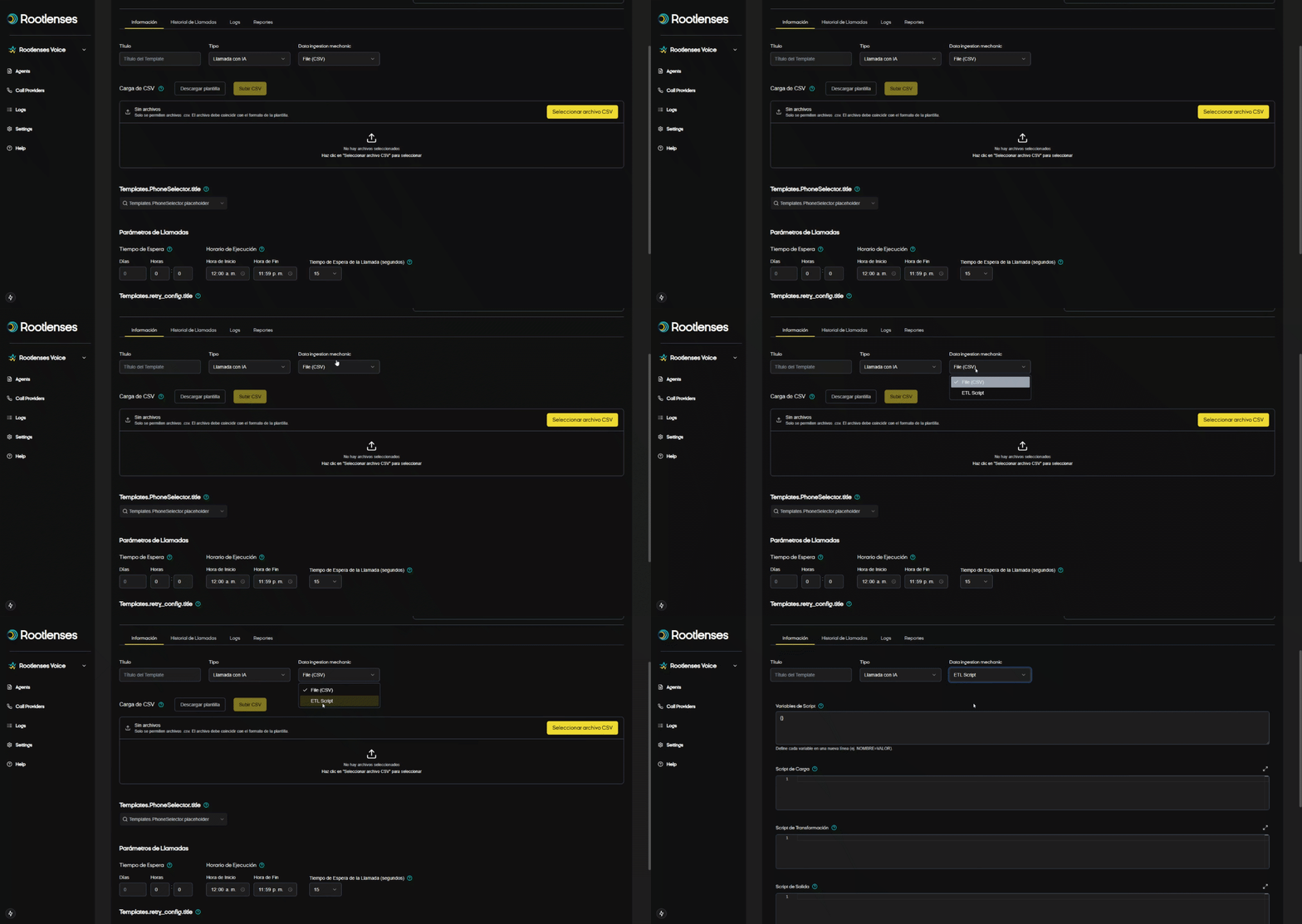
Recommended Adoption Roadmap Toward 2026
Phase 1 – Assessment (0–1 month)
Identify use cases and define success metrics.
Phase 2 – Initial Implementation (1–2 months)
Deploy an AI agent for inbound calls or a specific workflow.
Phase 3 – Optimization (3–6 months)
Refine conversation flows, expand integrations, and leverage advanced analytics.
Phase 4 – Scaling (6–12 months)
Add new use cases such as sales, collections, and advanced support.
Conclusion
2026 will be the year intelligent voice agents become a core operational pillar. Preparing today not only reduces risk but unlocks new opportunities to grow efficiently.


