
January 14, 2026
In the retail industry, speed of reaction defines profitability. As Product Owner of Rootlenses, I constantly observe how operations and sales leaders lose valuable hours consolidating spreadsheets and waiting for IT teams to extract historical data. Information arrives late, and the ability to act is drastically reduced.
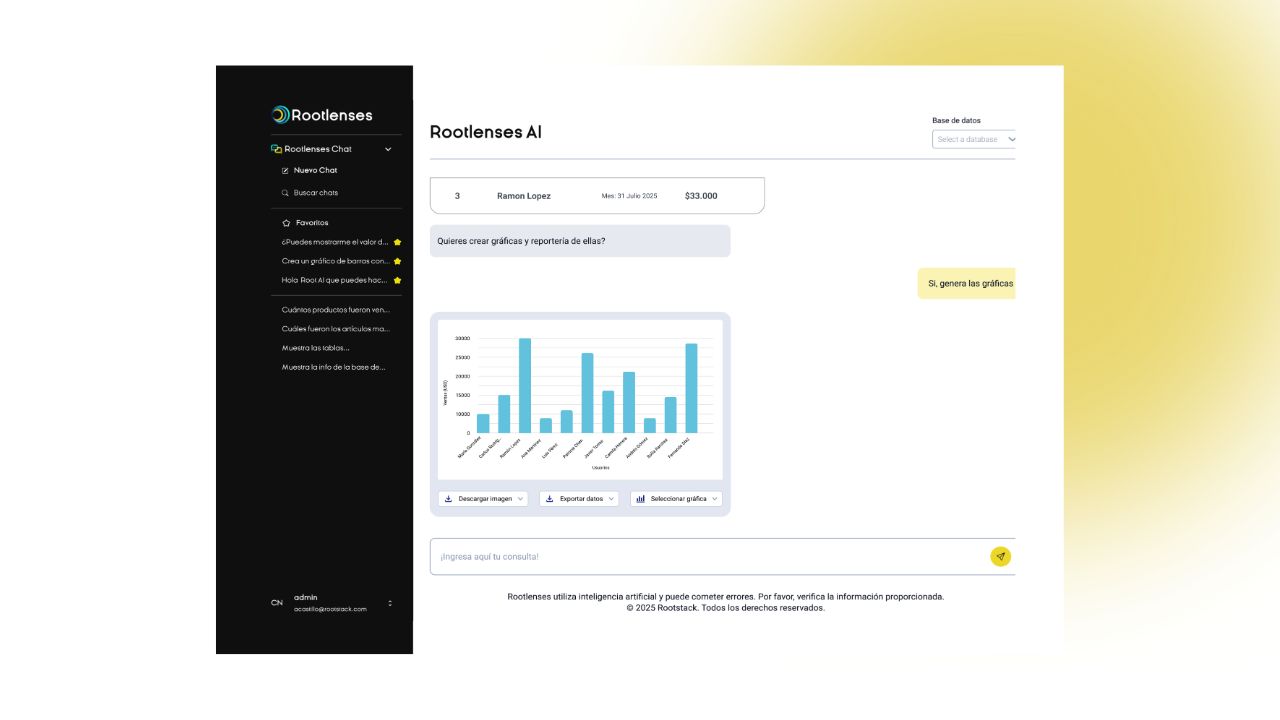
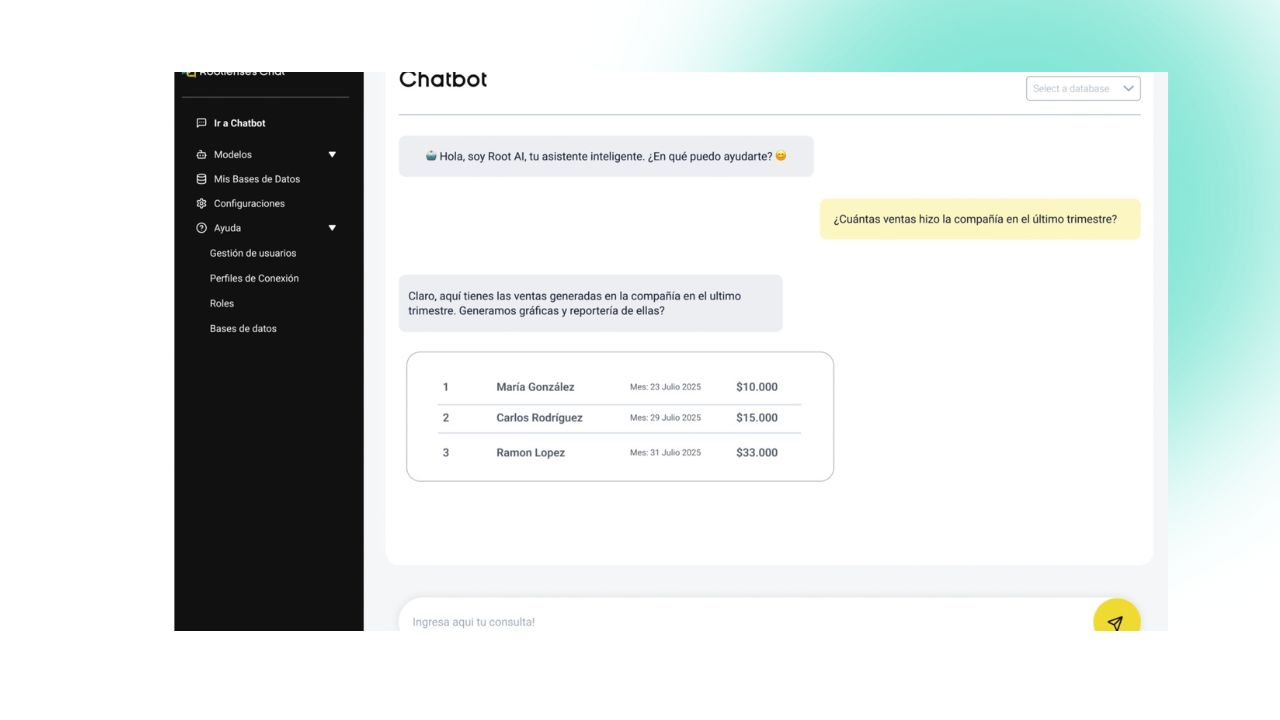
The volume of data generated by a retail chain—from point-of-sale (POS) transactions to real-time inventory levels—is massive. Processing this manually is inefficient. This is where Rootlenses Insight comes in. Our tool connects directly to your databases and allows users to query complex information using natural language, eliminating the technical barrier of SQL or the dependency on data analysts for routine reports.
Below, I outline five critical reports that any modern retail operation can and should automate using artificial intelligence to accelerate decision-making.
5 retail reports you should automate today with AI
1. Stockout and overstock detection
The opportunity cost of an unavailable product is high, but the storage cost of idle inventory also impacts margin. Traditionally, this report requires cross-referencing daily sales data with warehouse and in-store inventory.
With Rootlenses Insight, we automate this analysis by enabling direct queries such as: “Which SKUs have less than 3 days of coverage in stores in the North region?” or “Show me the list of products with zero rotation in the last 30 days.”
Functional value:
- Immediate identification of stores at risk of stockouts.
- Efficient reallocation of merchandise between branches.
- Adjustment of purchase orders based on real demand rather than static historical averages.
2. Promotion effectiveness analysis
Marketing campaigns and mass discounts are often evaluated at the end of the period, when it is no longer possible to course-correct. An automated report makes it possible to monitor promotion performance in real time.
By integrating transactional data with the promotions calendar, Rootlenses Insight allows you to ask: “What is the contribution margin of the ‘Summer 2024’ promotion compared to the previous week?” or “Compare the average ticket with and without promotional items today.”
Functional value:
- Real-time visibility into marketing ROI.
- Ability to stop promotions that erode margin without increasing volume.
- Identification of sales cannibalization between products.
3. Comparative store performance (clustering)
Comparing a store’s performance against its budget is basic. True insight emerges when comparing stores with similar characteristics (same square footage, demographics, location) to detect operational anomalies.
Using AI, we can automate the normalization of this data. A regional manager can ask: “Tell me which ‘Express’ format stores are 15% below their cluster’s average sales this week.”
Functional value:
- Rapid detection of local operational issues (staff shortages, technical problems).
- Fair benchmarking across branches.
- Standardization of operational KPIs.
4. Market basket analysis
Understanding which products are purchased together is essential for planogram design and cross-selling strategies. This report is often computationally expensive and performed infrequently.
Rootlenses Insight streamlines this process by enabling queries about specific product associations. For example: “Which products were most frequently sold together with the ‘Dairy’ category this weekend?”
Functional value:
- Optimization of store layout to increase average ticket size.
- Design of cross-promotions based on real behavioral data.
- Better inventory planning for complementary products.
5. Staff productivity and conversion
In-store traffic does not always translate into sales. Cross-referencing data from people counters with POS transactions and employee shifts produces a vital report on labor efficiency.
Instead of static weekly reports, automation makes it possible to ask: “Show the conversion rate by hour for the Downtown store during the afternoon shift.”
Functional value:
- Adjustment of schedules based on traffic peaks rather than intuition alone.
- Objective evaluation of sales staff performance.
- Identification of low-traffic or low-conversion hours to implement restocking tasks.
Optimize your operation with accessible data
Report automation is not just about saving time building Excel files; it’s about democratizing access to information. Rootlenses Insight removes the friction between a business question and a data-driven answer.
If your team is still spending hours consolidating information instead of analyzing it, it’s time to integrate artificial intelligence into your workflow.


