
April 13, 2026
The retail sector generates massive volumes of daily data through physical transactions, eCommerce platforms and inventory systems. Extracting value from this information requires speed and precision. However, many companies continue to rely on manual data extraction and consolidation processes.
This dependency creates a hidden cost that directly affects profitability and operational efficiency. Manually consolidating spreadsheets consumes hours of work that teams could spend on strategic tasks. Furthermore, working with outdated information prevents you from reacting in time to changes in demand or problems in the supply chain.
This article details the fundamental problems of traditional reporting in the retail industry. The following explains how the adoption of new technologies allows you to eliminate bottlenecks, reduce errors and facilitate immediate access to critical business information.
The impact of manual reporting on data analytics in retail
Data analytics in retail requires agility. Maintaining manual reporting methods introduces severe friction into daily operations. These are the main pain points of this approach:
Slow and repetitive processes
Analysts spend a large part of their days downloading data from different platforms, cleaning formats and crossing tables. This repetitive workflow delays the delivery of vital information to store managers and commercial directors.
Human errors
Constant manipulation of data increases the probability of failures. A copying error or an incorrect formula in a spreadsheet alters the final results, leading executives to make decisions based on inaccurate information.
Lack of real-time dashboards
Manual reporting provides insight into the past. When the weekly or monthly report reaches the decision makers, the sales opportunities have already passed or stockouts have already affected the end customer.
Dependence on technical teams
Business users often rely on IT or specialized analysts to create new queries or modify existing reports. This creates bottlenecks and delays obtaining critical answers.
Lack of scalability
As a retail company opens new branches or expands its digital channels, the volume of data grows exponentially. Manual processes collapse under this load, making it impossible to maintain the pace of business growth.

Direct consequences on business
The technical deficiencies of manual reporting quickly translate into economic losses and operational problems:
- Loss of revenue opportunities: The inability to identify purchasing trends in time prevents adjusting prices or launching effective promotions when demand is high.
- Late decisions: Responding to competitive activity or abrupt changes in the market requires agility. Without updated data, the ability to react is zero.
- Operational inefficiencies: The labor cost of maintaining teams dedicated exclusively to preparing reports is high and provides a low return on investment.
- Problems in inventory and forecasting: The lack of accurate visibility generates excess stock in certain products and shortages in others. This highlights the critical need to implement inventory optimization with AI.
How artificial intelligence in retail transforms analysis
The evolution towards modern retail business intelligence requires eliminating routine manual intervention. The application of artificial intelligence and automated reporting solves these structural problems definitively..
Report automation allows you to directly connect data sources and structure information without human intervention. This ensures that decision makers access insights in real time.
Additionally, the integration of natural language models makes it easy for any user to query complex metrics by asking simple questions, dramatically reducing errors and fostering a culture of data-driven decision making throughout the organization.
Rootlenses Insight: Advanced Analytics without SQL
Rootlenses Insight is a tool that helps companies query and analyze their data more immediately and easily with AI. Its approach solves the problems of traditional reporting through the following technical capabilities:
- Integration of multiple databases: It connects directly to the client's information sources (ERPs, CRMs, point of sale systems), unifying data silos.
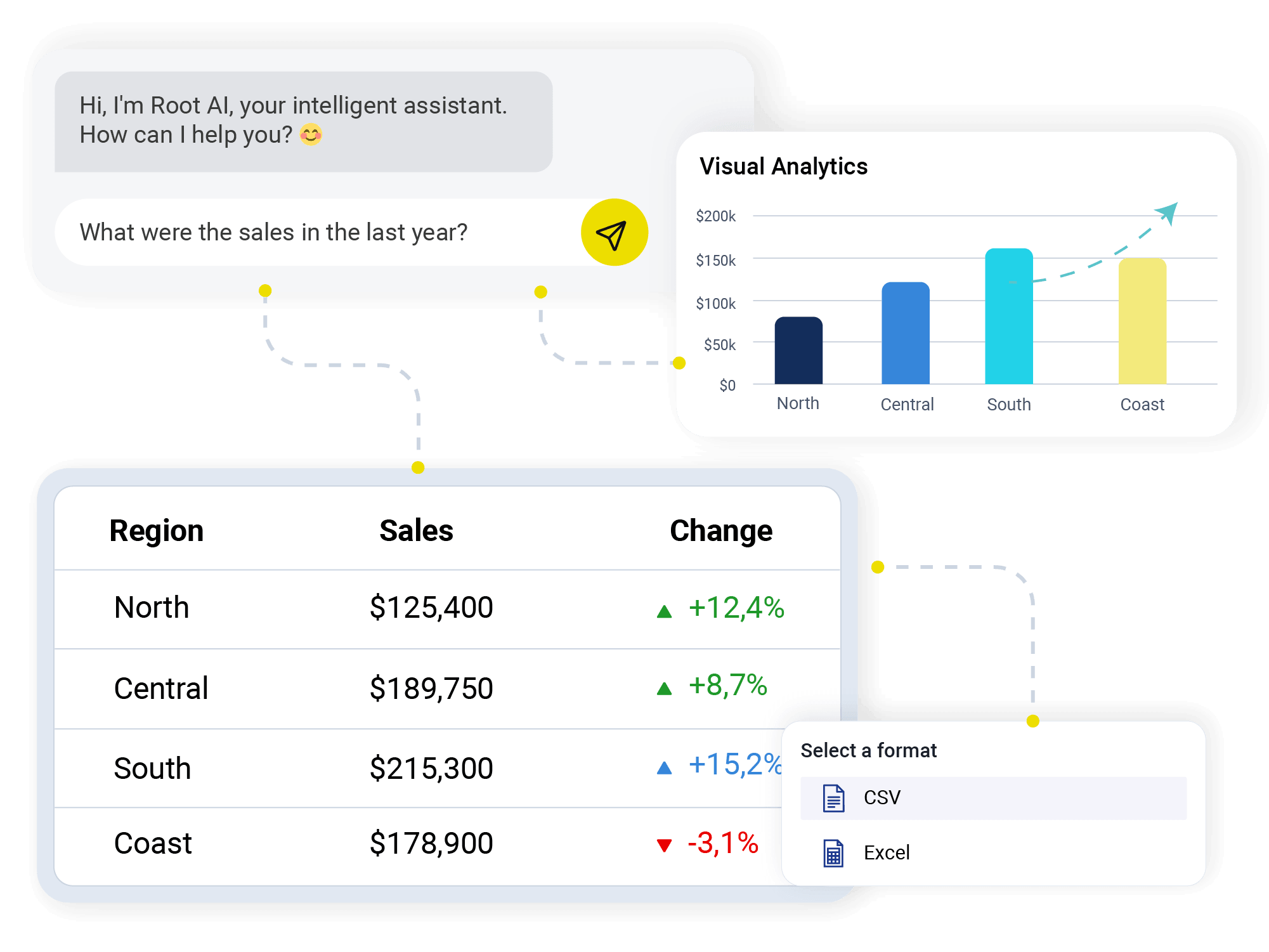
- Automatic report generation: Transform raw information and generate automated visualizations and reports without requiring constant manual configuration.
- Analysis without the need for SQL: Users access information by asking questions to a chat in natural language. There is no need to have programming knowledge or depend on the IT team.
- Actionable Insights: The system not only displays data, but identifies patterns and anomalies, providing clear recommendations for operation.
- Data security and governance: Maintains strict control over who accesses information, ensuring that corporate data remains protected under industry standards.
Rootlenses Insight Benefits and Practical Use Cases
The implementation of advanced analytics impacts multiple areas of retail:
- Inventory Management: Automatic identification of products with low turnover to apply discounts before they generate storage costs.
- Sales in physical stores: Analysis of performance by branch, square meter or seller, adjusting commercial objectives daily.
- ECommerce Operations: Monitoring digital purchasing behavior, abandoned carts and campaign effectiveness in real time.
Moving to automated scanning with Rootlenses Insight
Success in modern retail requires speed and precision. Maintaining manual reporting processes represents an unsustainable competitive disadvantage.
Adopting artificial intelligence solutions for data management allows organizations to optimize their processes, streamline decisions and transform the end customer experience.


