
April 13, 2026
In the retail industry, data should be the most valuable asset for decision making. However, in practice, many leaders and operational teams do not fully trust them. This distrust not only slows down decision-making, but directly impacts revenue, operational efficiency, and customer experience.
In this article we explore the main data pain points in retail and how artificial intelligence applied to data analytics can transform this reality.
Data trust issues in retail and their impact on data analytics with AI
Retail generates enormous volumes of information: sales, inventories, customer behavior, digital channels, logistics and more. Despite this, many teams face a critical problem: they don't trust their own data.
Main reasons for mistrust
1. Fragmented data sources and lack of data integration with AI
Data is usually distributed across multiple systems:
- ERP
- POS
- eCommerce platforms
- marketing tools
This creates inconsistencies and makes it difficult to have a “single source of truth.”
2. Inconsistent reports in retail business intelligence systems
It is common for different teams to work with different metrics:
- Marketing reports a figure
- Finance other
- Operations a different
This creates internal friction and loss of credibility in the dashboards.
3. Dependency on technical teams in traditional data analytics
Many decisions depend on:
- data analysts
- BI teams
- developers
This creates bottlenecks and limits business agility.
4. Lack of context in dashboards and predictive analytics with AI
Traditional dashboards show “what happened”, but do not explain:
- why it happened
- what actions to take
This limits the real value of analytics.

Impact on revenue due to lack of advanced analytics with artificial intelligence in retail
Lack of trust in data has direct consequences:
- Decisions based on intuition instead of data
- Loss of revenue opportunities
- Operational inefficiencies
- Poor inventory planning
- Inconsistent customer experiences
In a highly competitive environment, this can mean losing advantage over more data-driven competitors.
How artificial intelligence improves data analytics in retail
AI applied to data analytics in retail is redefining the way organizations interact with their information.
1. Data unification with artificial intelligence
Modern AI solutions can connect to multiple sources and:
- automatically understand schemas
- relate data between systems
- generate a unified view
This eliminates silos and improves consistency.
2. Access to data analytics with AI in Lennatural gourd
Instead of relying on SQL or technical teams, users can:
- ask questions in natural language
- get immediate answers
- generate reports in seconds
This drives the democratization of data in retail.
3. Generation of insights with advanced analytics and artificial intelligence
AI not only displays data, but:
- identify patterns
- detects anomalies
- suggest actions
For example:
- identify products with low turnover
- detect sales declines by region
- suggest inventory optimization
4. Decision making based on predictive analytics with AI
With reliable and accessible data:
- teams trust information more
- decisions are faster
- friction between areas is reduced
This translates into a more agile and competitive business.
How Rootlenses Insight drives data analytics with artificial intelligence in retail
This is where Rootlenses Insight provides clear differential value.
Integration of multiple data sources
Rootlenses Insight integrates with:
- MySQL
- SQL Server
- PostgreSQL
- Oracle
Allowing information to be centralized without complex processes.
Automated data analytics with AI
The platform uses AI to:
- understand database structures
- interpret relationships
- generate analysis without manual configuration
This eliminates dependence on technical equipment.
Natural language queries for self-service analytics
Users can ask:
- “Which store had the most growth this month?”
- “What products have the lowest turnover?”
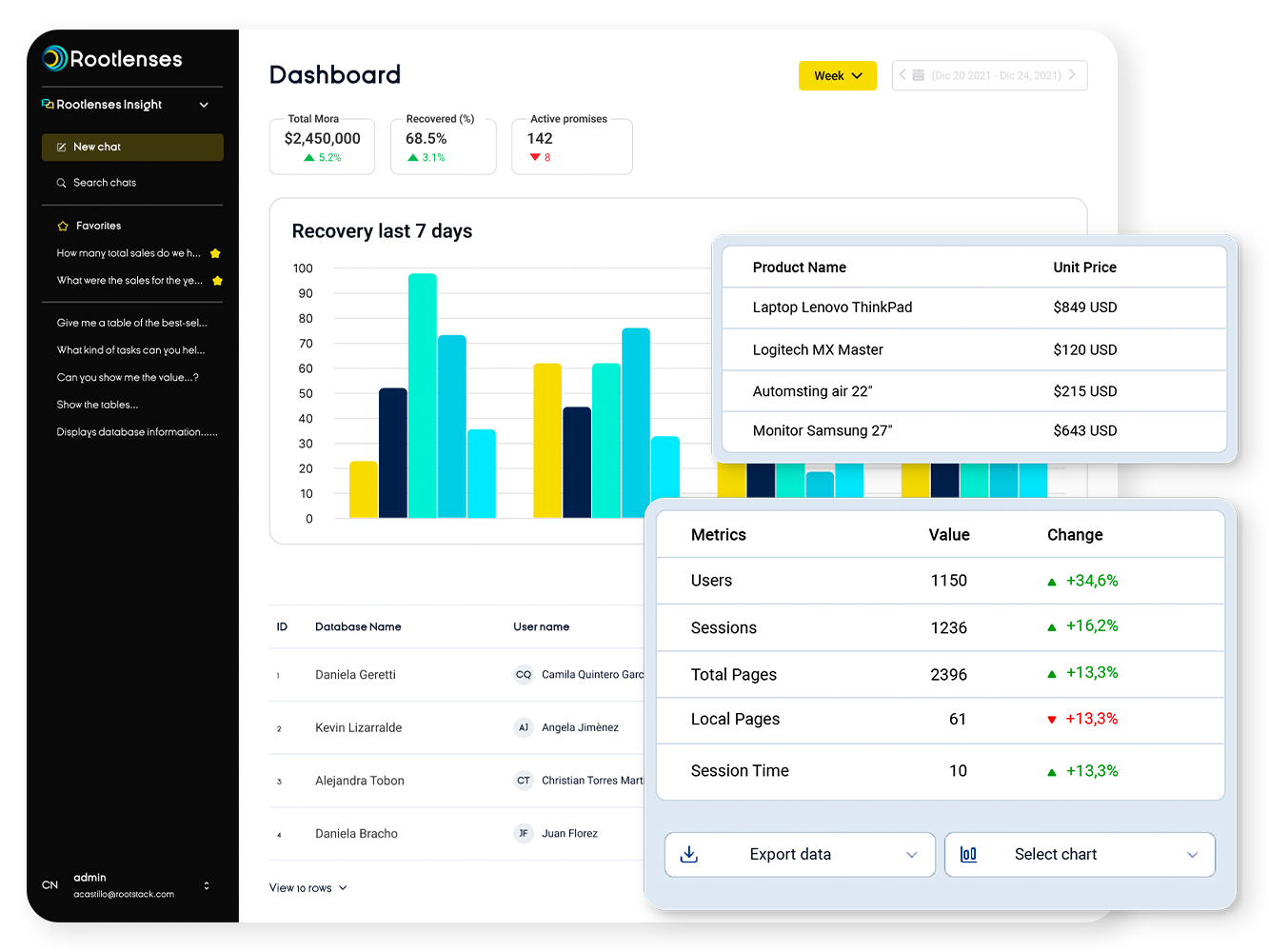
And get clear answers, visualizations and exportable reports.
Actionable insights with artificial intelligence
Rootlenses Insight not only shows data, but:
- suggests opportunities
- identifies risks
- drives data-driven decisions
Governance and security in data analytics with AI
With role access controls, companies can:
- democratize data use
- maintain security and compliance
Benefits of implementing artificial intelligence in retail data analytics
Implementing AI analytics like Rootlenses Insight allows you to:
- Increase confidence in data
- Reduce analysis times
- Improve inventory planning
- Optimize pricing strategies
- Increase revenue through informed decisions
Conclusion: the future of retail with AI-powered data analytics
The distrust inData is not a technical problem, it is a business problem. In modern retail, where speed and accuracy are key, relying on data is a competitive advantage.
Artificial intelligence is closing the gap between complex data and clear decisions. Solutions like Rootlenses Insight allow you to transform dispersed data into actionable, accessible and reliable insights for the entire organization.
The result: more aligned teams, smarter decisions, and sustainable, data-driven growth.


